
Popping Boba vs Tapioca: What’s Better?
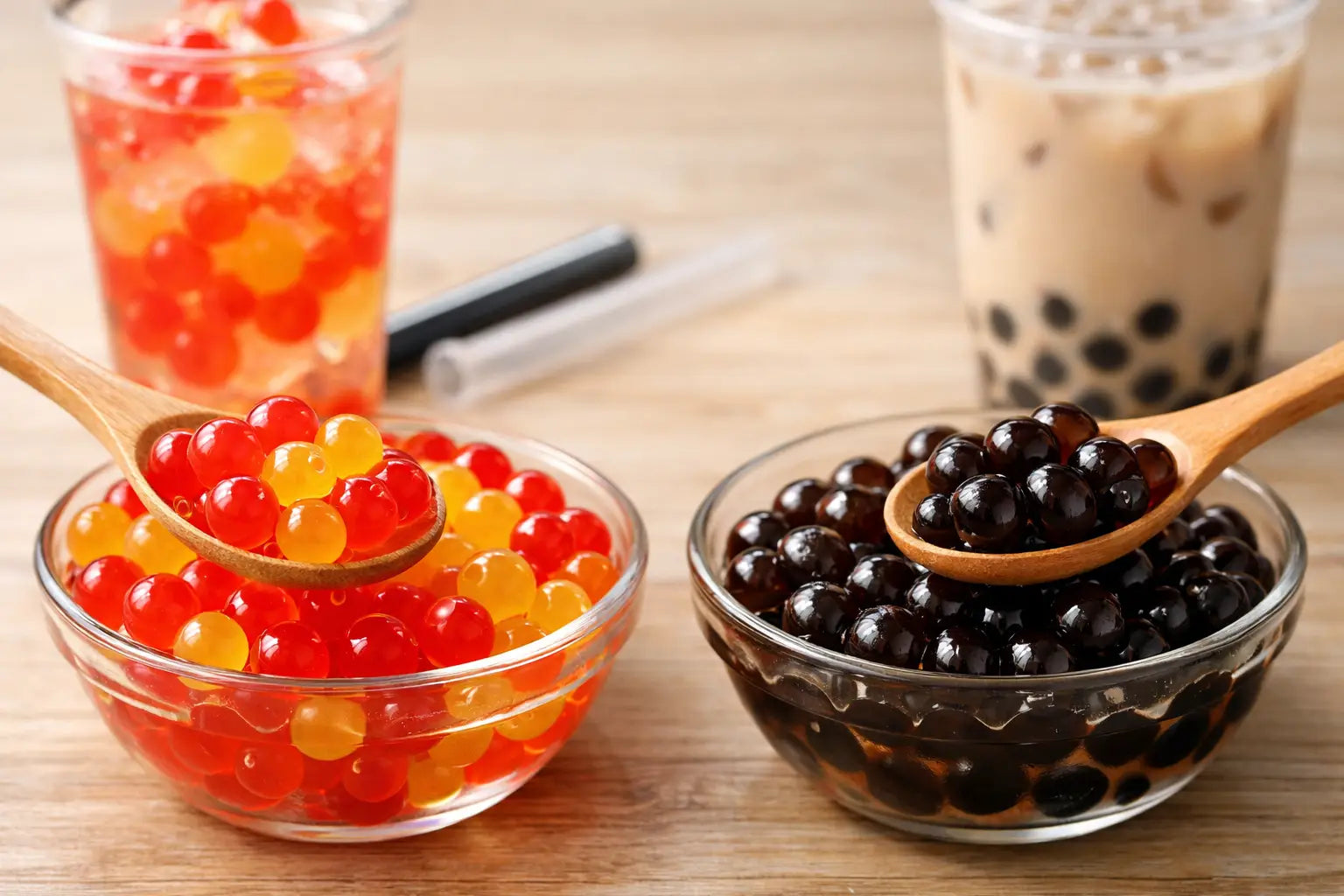
You can tell a lot about a bubble tea order by the topping. Some people want that classic chewy finish that turns a drink into a proper treat. Others want a fruity pop that makes every sip feel a bit more playful. If you’ve been weighing up popping boba vs tapioca, the right pick comes down to texture, flavour, prep time and the kind of bubble tea moment you’re after.
For home bubble tea fans, this choice matters more than it might seem. The topping changes how the drink feels, how sweet it tastes and even how easy it is to make. If you’re putting together drinks for a birthday, a weekend treat or a kitchen-table bubble tea bar, knowing the difference helps you get that shop-style result without the guesswork.
Popping boba vs tapioca: the main difference
The easiest way to think about it is this: tapioca is chewy, while popping boba bursts. Tapioca pearls are usually made from tapioca starch and need cooking before they’re ready to drink. They have that signature bounce people expect from classic milk tea, with a soft, stretchy chew that sits somewhere between comforting and addictive.
Popping boba is a different experience altogether. These little juice-filled spheres have a thin outer layer that gives way as soon as you bite. Instead of chew, you get a quick pop and a burst of flavour. They’re often fruit-based, brighter in taste and much easier to use straight from the pack.
Neither is automatically better. It depends whether you want your drink to feel traditional and satisfying, or fresh, colourful and fun.
What tapioca pearls are like in a drink
Tapioca pearls are the classic bubble tea topping for a reason. They bring body to a drink. In a brown sugar milk tea, a creamy chai-style blend or a simple iced milk tea, the pearls make each sip feel richer and more substantial. You’re not just drinking tea at that point - you’re having a proper bubble tea.
Their flavour on its own is fairly neutral, which is actually part of the appeal. Tapioca takes on the sweetness of the syrup or tea around it, so it works especially well in milk-based drinks where you want the topping to add texture without fighting the main flavour.
The trade-off is prep. Tapioca usually needs boiling, soaking and timing properly. If it’s undercooked, it can be too firm in the middle. If it sits too long, it can lose that lovely chew. For people who enjoy the classic café experience and do not mind a few extra steps, that effort is worth it. For a quick after-school treat or party set-up, it can feel a bit more hands-on.
What popping boba is like in a drink
Popping boba leans into the fun side of bubble tea. It adds instant flavour, bright colour and a bit of surprise. Because each pearl is filled with juice, it does more than change texture - it changes the drink’s taste with every pop.
This makes it especially good in fruit teas, lemonades, coolers and iced drinks where you want something light and lively. Mango, strawberry, lychee or blueberry popping boba can make a simple drink feel much more exciting, especially for younger bubble tea fans or anyone who likes trying different flavour combinations.
It also wins on convenience. There’s no boiling or careful timing involved. You just spoon it in and it’s ready to go. That’s a big plus for beginners, for gifting, and for anyone creating several drinks at once. If the goal is easy, impressive and low-fuss, popping boba has a very strong case.
Which one tastes better?
This is where it really becomes a personal preference question. Tapioca gives you more of a classic bubble tea taste because it is tied so closely to traditional milk tea. It is less about bold flavour in the pearl itself and more about that familiar chewy finish.
Popping boba is usually more flavour-forward. If you want the topping to stand out, it will. A passion fruit or apple popping boba can lift a drink and make it taste fruitier, sweeter and more playful straight away.
For some people, tapioca feels more balanced because it lets the tea stay centre stage. For others, popping boba is more exciting because the topping brings a second flavour into the cup. If you love creamy drinks, tapioca often feels like the better match. If you prefer refreshing drinks, popping boba often comes out on top.
Texture matters more than people expect
A lot of first-time bubble tea makers focus on flavour, but texture is usually what decides your favourite. Tapioca pearls are soft and chewy, so they slow the drink down. You sip, chew and enjoy it over a bit more time. That makes them ideal if you want your drink to feel indulgent.
Popping boba is lighter and quicker. The pearls do not linger in the same way. You get a burst, then it’s gone, which keeps the drink feeling bright rather than heavy. This is one reason popping boba tends to be popular for spring and summer drinks, while tapioca feels right at home in richer, creamier blends all year round.
If you’re serving a group, texture is worth considering carefully. Some people adore chewiness, while others do not. Popping boba is often the easier crowd-pleaser because it feels less unfamiliar to first-timers.
Popping boba vs tapioca for making bubble tea at home
At home, convenience can be the deciding factor. Tapioca pearls can absolutely give you that authentic bubble tea shop feel, but they ask for a little more attention. You need to cook them properly, use them at the right time and plan around their texture being best when fresh.
Popping boba is much simpler to fit into everyday life. It is beginner-friendly, quick to serve and easy to pair with loads of different drinks. If you’re making bubble tea with children, setting up a DIY drinks station or wrapping a kit as a gift, popping boba tends to remove a lot of the stress.
That does not mean tapioca is only for experts. It just suits a different kind of home bubble tea session - one where the process is part of the fun. If you enjoy making drinks from scratch and want the full classic experience, tapioca is still a brilliant choice.
Best drink pairings for each topping
Tapioca shines in milk teas and dessert-style drinks. Think brown sugar, vanilla, taro, chocolate or classic black tea with milk. Its chewiness adds comfort and substance, and it works best when the drink has a creamy base that can support it.
Popping boba works beautifully in fruit tea, iced green tea, lemonade and sparkling drinks. It also suits layered drinks and colourful party-style recipes because it looks cheerful and adds flavour instantly. If presentation matters - and let’s be honest, with bubble tea it often does - popping boba has plenty of visual appeal.
There are crossover moments, of course. Some people love popping boba in milk-based drinks for a fruit-and-cream effect. Others enjoy tapioca in lighter teas for texture alone. But if you want the safest starting point, creamy drinks with tapioca and fruity drinks with popping boba rarely disappoint.
So which should you choose?
Choose tapioca if you want the classic bubble tea experience, love a chewy texture and do not mind a bit of preparation. It is the topping for cosy, creamy, café-style drinks that feel like a proper treat.
Choose popping boba if you want something quick, colourful and easy to customise. It is ideal for beginners, parties, gifting and fruit-forward drinks that look as good as they taste.
If you’re still torn, there’s a very simple answer: keep both on hand. One gives you that traditional bubble tea feel, the other gives you instant fun. Brands like Bubble Panda make that kind of at-home choice easier, because you can create different drinks for different moods instead of sticking to just one style.
The best topping is not the one with the biggest fan club. It’s the one that matches the drink you want today - chewy and classic, or bursting and bright.
