
How to Cook Tapioca Pearls Properly
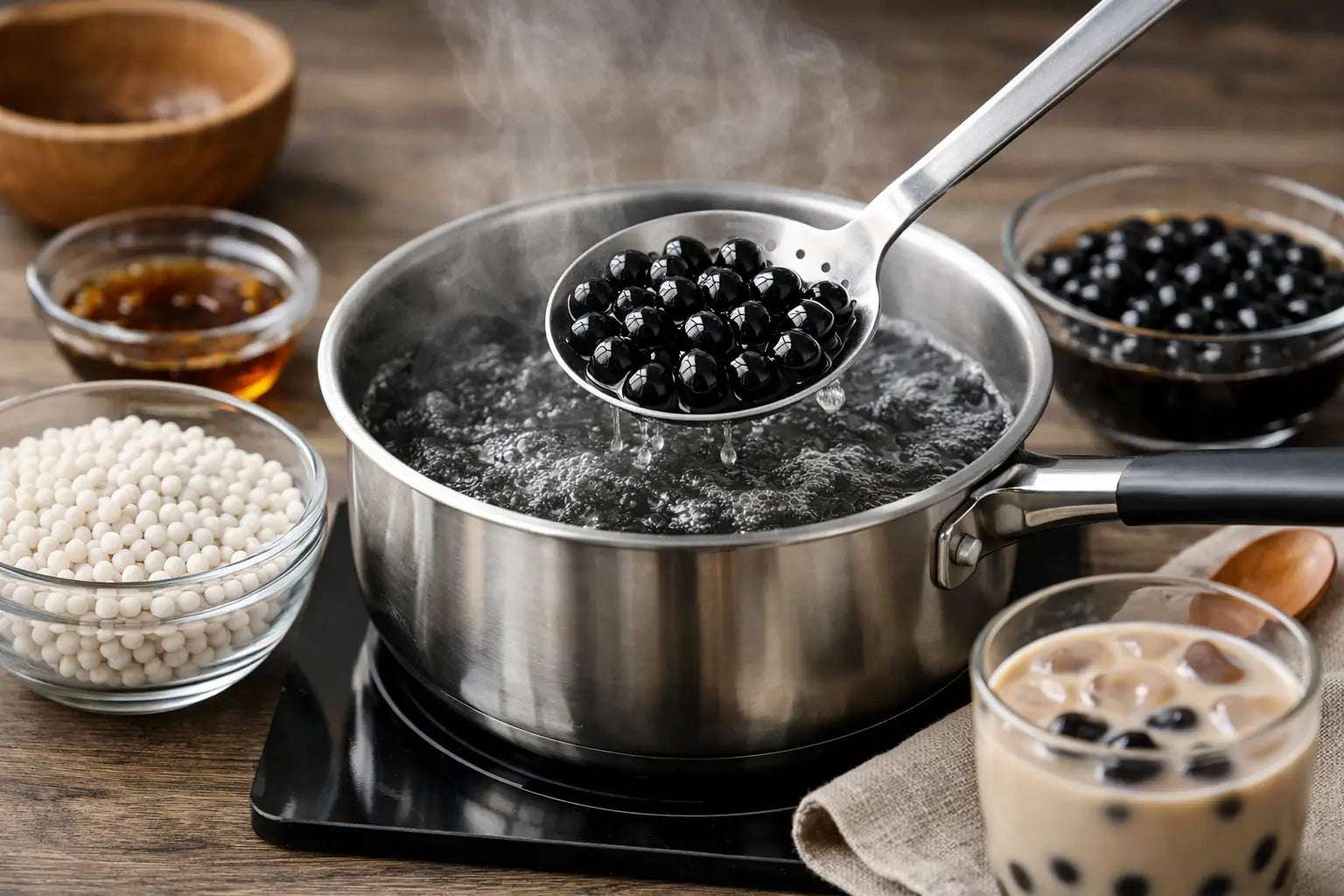
That first sip of bubble tea is all about the pearls. If they are too hard, your drink feels unfinished. If they turn mushy, the whole cup loses its bounce. Learning how to cook tapioca pearls properly is the difference between homemade bubble tea that feels nearly there and one that tastes like the real treat.
The good news is that boba is not difficult. It is just fussy. Small timing changes, too little water, or letting the pearls sit too long can all affect texture. Once you understand the method, though, it becomes wonderfully easy to repeat - especially when you want shop-style drinks at home without the guesswork.
How to cook tapioca pearls without guesswork
Tapioca pearls are made mostly from starch, so they behave differently from pasta or rice. They need plenty of boiling water, enough room to move, and careful timing. If you rush them, the centre stays chalky. If you overdo them, they lose that signature chew.
Start with a large pan of water. A generous ratio matters more than people expect because the pearls release starch as they cook. If the pan is too crowded, they stick together and the water thickens too quickly. For most dried black tapioca pearls, using at least 7 to 10 parts water to 1 part pearls works well.
Bring the water to a full rolling boil before adding the pearls. Not a gentle simmer, not almost boiling - properly boiling. Tip the pearls in slowly and stir straight away for the first 20 to 30 seconds so they do not clump at the bottom.
Once they are moving freely, keep the heat high enough to maintain a steady boil. Most standard tapioca pearls take around 20 to 30 minutes to cook, but this depends on their size and brand. Some quick-cook versions are ready in 5 minutes, while larger traditional pearls may need closer to 35 minutes plus resting time. That is why the packet always deserves a glance first.
A reliable method for standard dried pearls is to boil them for about 20 minutes, switch off the heat, cover the pan, and let them sit for another 15 to 20 minutes. This resting stage helps the centre finish cooking without the outside turning sloppy. When done, the pearls should look glossy and mostly translucent, with little to no opaque core.
What you need before you start
You do not need a kitchen drawer full of gadgets. A medium or large saucepan, a spoon, a sieve, and a bowl are enough. If you are making bubble tea for a few people, use a pan that gives the pearls plenty of space. A cramped saucepan is one of the easiest ways to end up with sticky clumps.
You will also want your sugar syrup ready. Freshly cooked tapioca pearls taste best when they are soaked in something sweet, because plain pearls can be a little bland. Brown sugar syrup is the classic choice and gives that rich, caramel-like finish people expect in brown sugar boba. A simple syrup made with equal parts sugar and water also does the job nicely.
The step that makes pearls taste better
After cooking, drain the pearls and rinse them briefly with warm water. This removes excess starch from the surface and stops them from continuing to cook too aggressively. Do not use cold water for too long, as that can firm them up too much and dull their texture.
Transfer the drained pearls into your syrup while they are still warm. Let them sit for at least 15 to 30 minutes. This step is easy to skip when you are keen to assemble your drink, but it makes a real difference. The syrup adds sweetness, keeps the pearls glossy, and helps them stay pleasantly chewy.
If you want a deeper flavour, warm the syrup first and stir the pearls through so they absorb more of it. This is also the easiest way to get that dark, shiny boba look that photographs so well in clear cups.
Common mistakes when cooking tapioca pearls
The biggest mistake is starting the pearls in water that is not fully boiling. That usually leads to uneven cooking and sticky edges. The second is using too little water, which encourages clumping and makes the pan starchy fast.
Timing is the next trouble spot. Tapioca pearls do not have one universal cooking time. It depends on size, thickness, freshness, and whether they are instant or traditional. If your pearls are still opaque in the middle after the suggested time, they simply need longer. If they are falling apart, they have gone too far.
Another common issue is making them too early. Tapioca pearls are at their best within a few hours of cooking. Leave them too long and they begin to harden in the centre or turn overly soft on the outside. That is why bubble tea made at home is often best when you cook the pearls shortly before serving rather than hours in advance.
How to fix texture problems
If your pearls are too hard, they probably need more cooking time or a longer covered rest. Put them back into hot water and continue gently until the middle softens. This works best if they are only slightly underdone. If the centres are fully chalky, it may take a bit more patience.
If they are too mushy, there is not much rescue available. Overcooked tapioca loses structure, and no amount of syrup will bring the bounce back. Your best fix is prevention next time - reduce the boil time slightly or check them earlier.
If the pearls clump together after draining, stir them through syrup straight away. Clumping usually happens when cooked pearls sit bare in a sieve or bowl and their starch cools on the surface.
Serving pearls in bubble tea
Once your pearls are cooked and sweetened, add them to the bottom of your glass before pouring in your tea or milk tea. This gives the drink that classic layered look and stops you from trying to spoon them in afterwards.
For iced milk tea, let the tea cool before assembling. Hot tea poured directly over tapioca can soften the pearls too much, especially if they are already at peak tenderness. For fruit teas, sweeter syrup-soaked pearls can create a lovely contrast, though popping boba is often lighter if you want something brighter and juicier.
If you are making drinks for a party or family activity, cook the pearls close to serving time and keep them in syrup at room temperature for the best texture. They are great for turning a simple drink station into something that feels a bit more special, and they make the whole experience more fun than just mixing tea and milk.
Storage and make-ahead tips
Freshly cooked tapioca pearls are not ideal for the fridge. Chilling tends to make them firm and unpleasantly tough. If you must make them ahead, keep them in syrup at room temperature and use them within about 4 hours. Some pearls can last a little longer, but the texture starts to drift.
Uncooked pearls, on the other hand, store well in a cool, dry cupboard if the packet is sealed properly. Humidity is not their friend, so keep them away from steam and damp cupboards.
If convenience matters, quick-cook pearls are worth considering. They trade a little of the old-school ritual for speed, which is often exactly what you want on a busy afternoon or when younger bubble tea fans are waiting in the kitchen. Traditional pearls can offer a slightly more satisfying chew, but it depends on what kind of home bubble tea moment you are after.
A simple method to remember
If you want the easiest version of how to cook tapioca pearls, think of it like this: boil plenty of water, add pearls only when the water is properly bubbling, stir well, cook until nearly translucent, rest them covered, then soak them in syrup while warm. That is the pattern that gets you closest to café-style boba without turning your kitchen into a science lab.
Once you have done it once or twice, it becomes one of those satisfying little routines. You can keep it classic with milk tea, go playful with fruit flavours, or make an occasion of it with a full DIY spread. Even better, it turns an ordinary drink into something a bit celebratory - exactly the sort of treat that makes staying in feel like the fun option.
