
Are Bubble Tea Kits Vegan? What to Check First
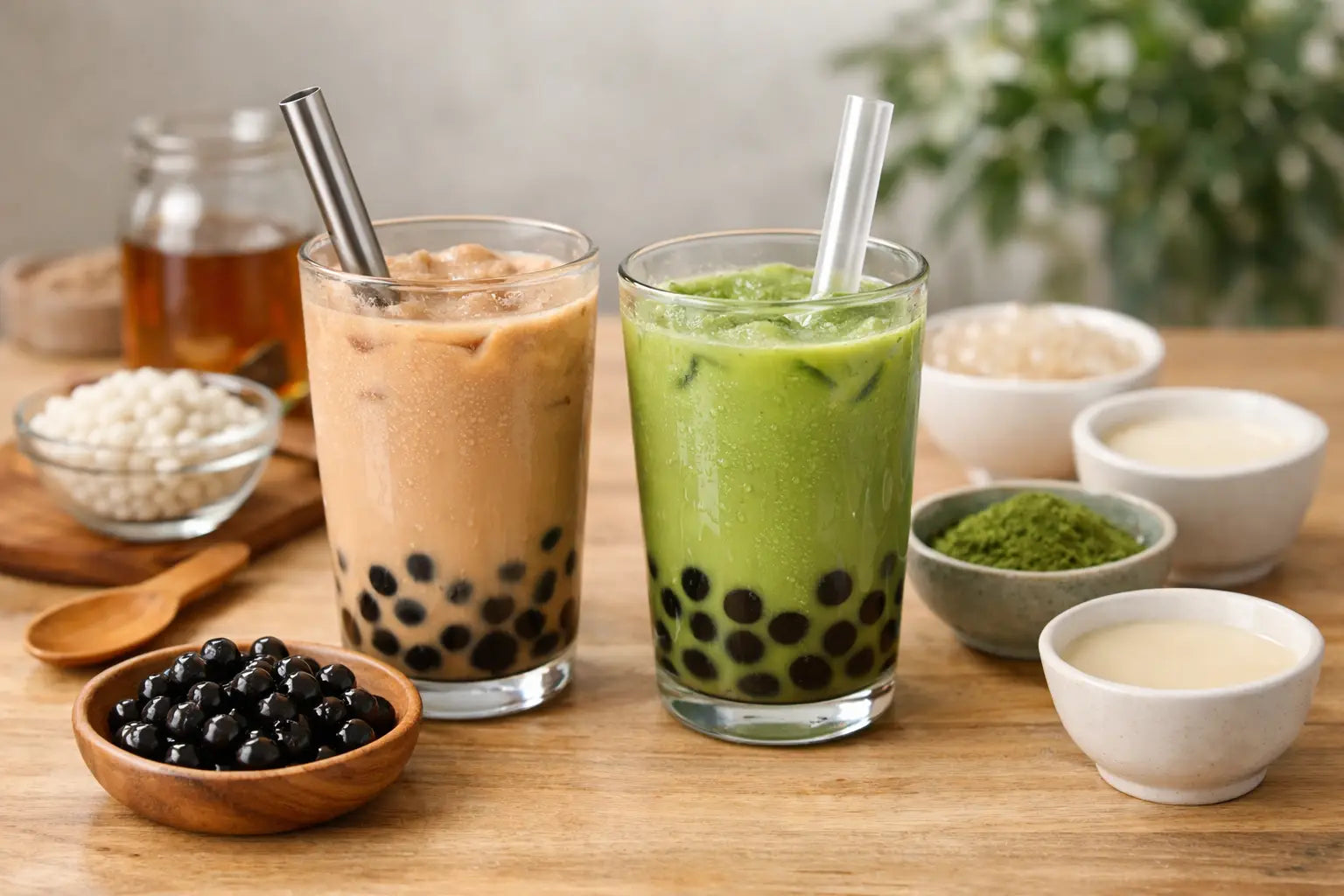
That colourful box of boba-making fun can contain far more than tea and tapioca. So, are bubble tea kits vegan? Sometimes, yes - but it depends entirely on the individual ingredients inside. A kit may include naturally vegan tea, pearls and fruit syrup, then add a milk powder or jelly that changes the answer.
The good news is that making bubble tea at home gives you more control than ordering from a busy menu board. Once you know where animal-derived ingredients can appear, it is much easier to choose a kit that suits your diet and still make a drink that feels like a proper treat.
Are bubble tea kits vegan by default?
No. Bubble tea kits are not automatically vegan simply because they are tea-based. Traditional milk tea is often made with dairy milk, and many at-home kits use milk powders or creamers for speed, sweetness and that creamy café-style finish.
Some kits are fully vegan, while others are partly vegan. For example, you might be able to enjoy the tea, syrup and tapioca pearls, but need to swap out the included milk powder. A fruit tea kit with popping boba may be vegan-friendly, but that still needs checking product by product.
The simplest rule is this: read the ingredient list for every sachet, pouch and topping rather than judging the kit by its front-of-pack flavour. A strawberry fruit tea and a strawberry milk tea can sound similar, yet have very different ingredients.
The ingredients most likely to decide it
Milk powders and creamers
This is the biggest one. If a kit includes milk powder, condensed milk powder, whey, casein, lactose or a dairy creamer, it is not vegan. Milk tea powders can also contain sodium caseinate, which comes from milk even when the word “dairy” is not the first thing you spot on the label.
Non-dairy does not always mean vegan either. It can describe a product with no lactose while still containing milk-derived proteins. Look specifically for a vegan label or check for clear dairy-free ingredients such as coconut milk powder, oat milk powder or soya milk powder.
If the rest of a kit is suitable, there is an easy fix: make the drink with your favourite plant-based milk instead. Oat milk gives a mellow, creamy result, soya tends to make a fuller milk tea, and coconut adds a lovely tropical note to mango, lychee and brown sugar flavours.
Tapioca pearls
Classic black tapioca pearls are usually made from tapioca starch, water, sugar and sometimes caramel colouring. Those basic ingredients are vegan. That makes pearls one of the easiest parts of bubble tea for plant-based drinkers to enjoy.
Still, “usually” is not the same as “always”. Ready-to-eat pearls in syrup, flavoured pearls or unusual novelty toppings can include extra flavourings, colourings or sweeteners. Check the packet, especially if you avoid honey or want products made without animal-derived processing aids.
Texture matters here too. Homemade tapioca takes a little patience, but cooking it fresh gives you those satisfyingly chewy, glossy pearls that make the whole glass feel special. Vegan does not have to mean compromising on the fun bit.
Popping boba and fruit jelly
Popping boba is commonly made using fruit juice or flavouring with a seaweed-derived setting agent, which is often suitable for vegans. Fruit jellies can also be plant-based, particularly those set with agar or carrageenan.
However, jelly is one topping where you should slow down and read properly. Some products use gelatine, while others may include honey, milk ingredients or flavourings with unclear origins. If the label states agar, pectin or carrageenan as the gelling agent and contains no other animal-derived ingredients, that is generally a reassuring sign.
Syrups, sauces and flavour powders
Fruit syrups are often vegan, as they are usually built around sugar, water, fruit flavour and colour. But creamy sauces and dessert-inspired flavours deserve closer attention. Think chocolate, salted caramel, cookies and cream, strawberry cheesecake or anything that sounds like it belongs on a pudding menu.
These can contain milk, butter powder, cream, whey or honey. Even a flavour powder that looks harmless can include a milk-based carrier to give it a rich taste. If you are making drinks for guests, do not assume that a fruity-looking sachet is suitable without checking.
Tea and flavourings
Plain black tea, green tea, jasmine tea and herbal tea are naturally vegan. Where things become less straightforward is flavoured tea blends and added flavourings. Most are fine, but their ingredients can vary, particularly in indulgent blends designed to mimic bakery flavours.
For strict vegans, certification is the clearest option. If a product is not certified but looks suitable from the ingredients list, you can decide what level of certainty feels right for you.
A quick way to check a kit before you buy
You do not need a food science degree or a magnifying glass the size of a saucer. Start with the product description and allergen information, then check the ingredient list for each component if it is available.
Watch for milk, whey, casein, lactose, butter, cream, yoghurt, honey and gelatine. Also look at the allergen statement. “Contains milk” gives a clear answer, while “may contain milk” usually refers to possible cross-contact during production rather than milk being an intended ingredient.
That distinction matters. Someone choosing vegan products for ethical reasons may be comfortable with a precautionary statement when the recipe itself contains no animal ingredients. Someone with a milk allergy must treat that statement much more carefully and follow medical advice. Vegan and allergy-safe are not interchangeable terms.
If the information is incomplete, ask the retailer before ordering. A good product listing should make it easy to understand what comes in the kit, particularly when it includes several separate sachets and toppings.
How to make a vegan bubble tea kit work for you
A kit does not have to be labelled vegan from top to bottom to be useful in a vegan kitchen. If the tea, sweetener and toppings are suitable, replacing one creamy sachet with plant milk can turn it into a brilliant custom drink.
For a classic brown sugar-style milk tea, use a strong black tea base and chilled oat milk. Add cooked pearls, plenty of ice and a spoonful of brown sugar syrup. For a lighter option, pair green or jasmine tea with peach, passion fruit or lychee syrup, then finish with popping boba instead of milk.
The fun is in choosing your own level of sweetness, ice and chew. You can make one round of drinks for a family film night, set out toppings for a birthday table, or let everyone build their own cup. Keep dairy and plant-based ingredients separate when serving a mixed group, and use clean scoops and straws for each topping.
Is vegan bubble tea always healthier?
Not necessarily - and that is perfectly alright. A vegan bubble tea can still be high in sugar, especially if it includes syrup, sweetened milk alternatives and several toppings. It is a joyful treat, not a lecture in a cup.
If you would like a lighter drink, use less syrup, choose unsweetened plant milk, brew the tea a little stronger and add fruit-based toppings for flavour. If you want the full dessert-style experience, go for it. The best part of making bubble tea at home is that the glass is yours to create.
Make your next boba night easier
The answer to “are bubble tea kits vegan?” is rarely a simple yes or no. Tea and tapioca may be plant-based, while creamers, jellies and flavour powders need a closer look. Once you know what to check, you can choose with confidence and spend less time decoding labels.
Pick flavours that make you smile, keep a favourite plant milk in the fridge, and turn your next homemade boba session into the kind of small, colourful occasion worth sharing.
