
A Guide to Tea Sweetness Levels for Boba
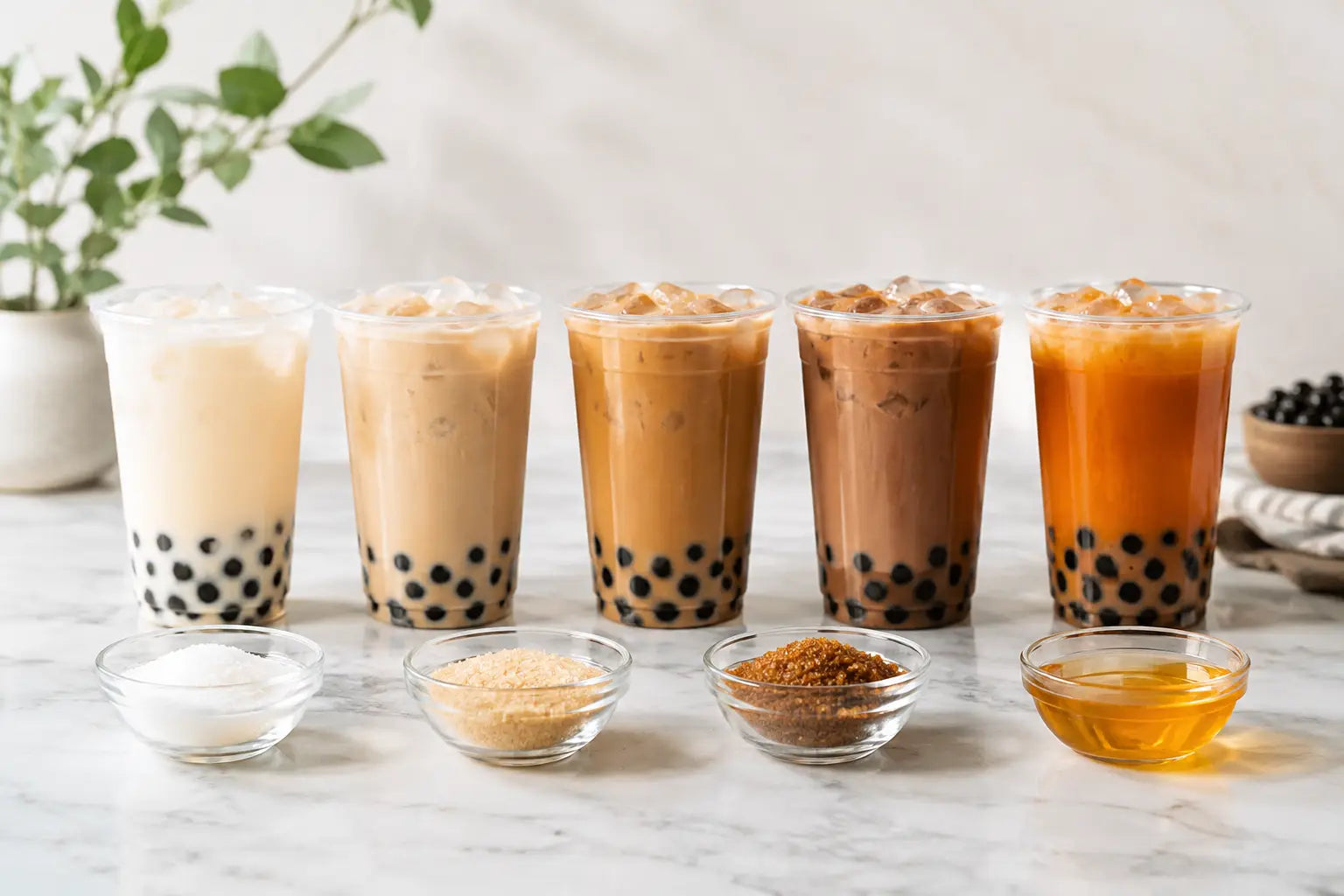
The first sip of bubble tea should taste like the drink you meant to make, not a surprise sugar rush or a cup of milk that forgot the tea. This guide to tea sweetness levels makes it easy to choose a sweetness that suits your taste, your toppings and the flavour you are mixing at home.
Sweetness is not just about adding more or less syrup. It changes how strongly you taste the tea, how creamy milk tea feels and whether fruity popping boba shines or gets lost. Once you know the basic levels, you can make café-style drinks your way - whether that means gently sweet peach tea, a classic brown-sugar-style treat or something properly pudding-like for a birthday bubble tea bar.
Guide to tea sweetness levels: the four easy choices
Most bubble tea menus use a percentage, but at home it is often more helpful to think in four simple levels. Your exact amount will depend on the size of your glass, how much ice you use and the syrup or powder in your recipe. Start small. You can always stir in another splash, but taking sweetness back out is rather harder.
- No sugar (0%): No added syrup or sugar. This is best for people who enjoy the natural tannins of black tea, the grassy notes of green tea or a clean fruity tea. Remember that toppings may still add sweetness.
- Light sweet (25%): A small amount of syrup, usually around one quarter of the usual serving. It gives the drink a soft, rounded flavour without making it dessert-like.
- Regular sweet (50%): The easy crowd-pleaser. This level keeps the tea present while giving milk teas and fruit teas the familiar bubble tea taste many people expect.
- Extra sweet (75-100%): Rich, bold and playful. It works brilliantly with strong black tea, plenty of ice or flavours designed to feel like a treat, such as cherry bakewell or gingerbread.
Start with the tea, not the sugar
Tea has its own character, and sweetness should support it rather than cover it up. A robust black tea can handle more syrup because its malty, tannic taste stays noticeable. That is why classic milk teas often taste great at regular sweetness, especially once ice has diluted the drink a little.
Green tea and jasmine tea are lighter and more fragrant. Too much syrup can hide those floral notes, so light or regular sweetness is often the happy place. If you are making a citrus, lychee or elderflower-style fruit tea, begin at light sweet. Taste it once the ice is in, then add more if needed.
Herbal and caffeine-free teas can be more delicate still. A berry tea may need a little sweetness to taste juicy, while peppermint may be better almost unsweetened. It depends on the blend, so treat your first glass as a tasty experiment rather than a fixed rule.
Why ice changes the answer
Ice is a quiet but major part of sweetness. As it melts, it dilutes both the tea and the syrup. A drink that tastes slightly too sweet before you add ice may be spot on five minutes later. If you prefer lots of ice, make your base a touch sweeter than you would for a drink served without it.
For a hot bubble tea, do the opposite. There is no melting ice to soften the flavour, so start with less syrup. Warm drinks can also taste sweeter than cold ones, particularly creamy milk teas.
Milk tea sweetness: creaminess needs balance
Milk powder, dairy milk and plant-based alternatives all change how sweetness lands on your tongue. Creamy ingredients smooth out tannins and can make a drink feel less sweet at first, which is why regular sweetness is a reliable starting point for milk tea.
However, some milk alternatives bring their own sweetness. Oat milk is naturally sweeter than many other options, while coconut-based drinks can add a rounded, tropical flavour. If you are using one of these, try light sweet first, especially with fruity flavours.
A useful home rule is to make the tea base, mix in the milk element, then add syrup gradually. Give it a proper stir or shake before tasting. Syrup can settle at the bottom, and a quick sip from the top does not tell the whole story.
For richer, bakery-inspired flavours
Dessert-style flavours are meant to be indulgent, but they do not always need extra sugar. Cherry bakewell, vanilla, caramel and gingerbread-style drinks already create the impression of sweetness through their aroma. Start at light or regular sweet, then let the toppings do some of the work.
This is especially handy when making drinks for a group. Offer the flavour base at a moderate level and put extra syrup on the table for anyone who wants a sweeter finish. It keeps the process easy while letting every guest customise their cup.
Toppings count towards sweetness too
The tea is only one part of the glass. Tapioca pearls are often cooked or soaked with sugar, popping boba burst with sweet fruit juice, and jelly can bring a bright, candy-like note. A regular-sweet tea plus two sweet toppings may taste much sweeter than you expect.
For a balanced drink, pair a sweeter topping with a lighter tea base. Mango popping boba in jasmine tea is lovely at no sugar or light sweet. Brown sugar tapioca works beautifully with a less-sweet black milk tea, because the pearls provide those caramel notes with every chew.
If you are making a layered drink for photos or a party, taste it after adding the topping. The first few sips may be tea-led, but the drink will grow sweeter as the boba and syrup mingle at the bottom.
A simple method for finding your favourite level
When you are trying a new kit or flavour, avoid guessing with a full glass. Mix the tea and milk base as directed, then add roughly half the suggested syrup serving. Add your ice and toppings, stir well and taste through a wide straw if possible. That way, you are tasting the drink as it is meant to be enjoyed.
If it needs more sweetness, add a small splash at a time. Wait a few seconds and taste again. Flavours can take a moment to blend, especially in cold drinks. Keeping a little note on your phone can help too: write down the tea, topping, ice level and sweetness you loved. Your perfect order becomes your perfect at-home recipe.
At Bubble Panda, the fun is in making each cup your own, whether you are mixing one quiet after-school treat or setting up a full bubble tea station for friends. Let younger makers choose between light, regular and extra sweet rather than handing them the syrup bottle first - it feels like customisation, with less chance of a very sticky surprise.
Sweetness ideas for popular bubble tea flavours
Classic black milk tea is usually happiest at regular sweetness, with light sweet a great choice for anyone who wants more tea flavour. Matcha or green tea milk drinks can be light or regular sweet, depending on how earthy you like them.
For fruit teas, light sweet lets fresh flavours such as peach, strawberry and passion fruit stay lively. Move to regular sweet if you are using lots of ice or enjoy a more cordial-like finish. Lemon and citrus flavours vary most: a little syrup can soften their sharp edge, but too much can make them taste flat.
British-inspired flavours invite a bit of play. Rhubarb and elderflower tastes bright and elegant at light sweet, especially with a green or floral tea. Cherry bakewell can carry regular sweetness and a creamy base. Gingerbread is cosy and bold, so it often tastes best with regular sweetness, milk and tapioca pearls rather than extra syrup.
Make the next cup yours
Think of sweetness as a dial, not a rule. Start at light or regular, let your tea, ice and toppings have their say, and adjust by small sips. The best bubble tea is not the one that follows a café menu perfectly. It is the one that makes your chosen flavour sparkle from the first boba to the last.
