
How to Make Popping Boba at Home
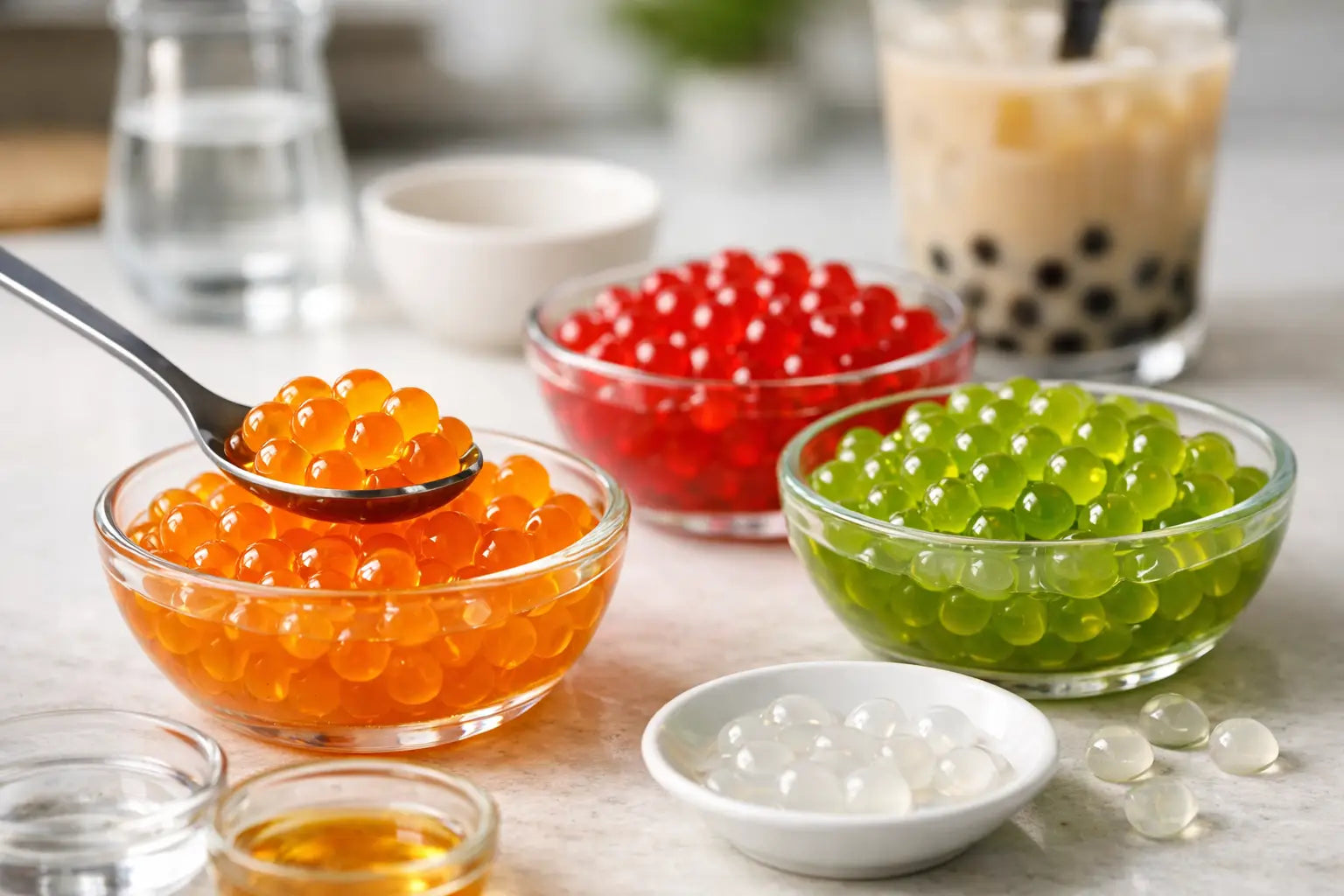
That first pop is the whole point. You sip your drink, catch a glossy little pearl, and suddenly there’s a burst of fruit flavour that makes homemade bubble tea feel properly special. If you’ve been wondering how to make popping boba, the good news is that it is absolutely possible in a home kitchen - but it takes a bit more precision than standard tapioca pearls.
Popping boba is different from chewy boba. Instead of cooking a starch-based pearl until soft, you are making a thin gel skin around a liquid centre. That is what gives it the signature pop. It sounds a bit like kitchen wizardry, but once you understand the method, it becomes much less intimidating.
How to make popping boba: what it actually is
Popping boba is usually made using a technique called spherification. In simple terms, a flavoured liquid is dropped into a setting bath, which forms a delicate outer layer while keeping the middle more liquid. Bite into it and the centre bursts.
The two ingredients that make this happen are normally sodium alginate and calcium lactate or calcium chloride. Sodium alginate comes from seaweed and helps create the gel membrane. The calcium bath triggers the reaction. If you have ever seen fruit “caviar” on desserts, it is the same basic idea.
This is also where expectations matter. Homemade popping boba can be brilliant, but it may not look as perfectly uniform as the ones made in factories. That is fine. If they taste great and pop nicely, you have done the fun bit well.
Ingredients and equipment you’ll need
For a basic batch, you will need fruit juice or a flavoured liquid, sodium alginate, calcium lactate, and water. A little sugar can help if your juice is sharp, and food colouring is optional if you want a brighter look.
You will also need a blender or hand blender, a couple of bowls, a spoon or small syringe, and a fine strainer. A measuring scale is genuinely helpful here because small differences can affect the texture.
If you want the easiest route to café-style drinks at home, ready-made toppings are often the quicker choice. But if the goal is a fun kitchen project for a weekend, party, or birthday activity, making your own popping boba is a great one.
The best liquid for homemade popping boba
Start with something flavourful but not too thick. Fruit juices work well, especially mango, lychee, strawberry, apple, or blueberry. Cordials and syrups diluted with water can also work, which gives you more room to play with flavour combinations.
Very pulpy liquids can be tricky because lumps make it harder to form neat spheres. Creamy mixtures are also less predictable. If you are new to this, begin with a smooth, strained juice. Once you have the method down, you can experiment more confidently.
A bright, slightly sweet flavour usually gives the best result because the boba itself is small. Delicate flavours can get lost once added to tea, lemonade, or milk-based drinks.
How to make popping boba step by step
1. Make the flavoured base
Blend 200ml of juice with 2g of sodium alginate until fully smooth. Try not to whisk in too much air. If bubbles form, let the mixture sit for 15 to 30 minutes so it can settle. This matters more than people think - trapped air can make the pearls misshapen.
2. Prepare the calcium bath
In a separate bowl, mix 500ml of water with 5g of calcium lactate until dissolved. This is the bath that will set the outer layer of your boba.
Some recipes use calcium chloride instead, and it does work, but it can leave a slightly bitter taste if the pearls are not rinsed well. Calcium lactate is often the friendlier option for home use.
3. Drop in your pearls
Using a syringe, pipette, teaspoon, or squeeze bottle, drip the flavoured mixture into the calcium bath. As each drop lands, it should begin forming into a sphere. Smaller drops are easier to control and tend to pop better than oversized ones.
Leave them in the bath for about 30 seconds to 2 minutes, depending on how thick you want the outer skin. A shorter time gives a thinner shell and a juicier pop. Too long, and the whole pearl can turn overly firm.
4. Rinse and chill
Scoop the boba out with a slotted spoon or strainer and rinse them in clean water. This stops the setting process and removes any lingering calcium taste. After that, transfer them to a little fresh juice or syrup and chill them in the fridge.
That final soak helps keep them tasty. Plain water will hold them, but storing them in flavoured liquid makes a noticeable difference.
Common mistakes when learning how to make popping boba
If your boba are trailing into odd shapes instead of forming spheres, your flavoured mixture may be too thin or your dropping technique may be uneven. Try using a slightly deeper spoon or a squeeze bottle for more control.
If they become rubbery all the way through, they have likely sat in the calcium bath too long. This is one of the biggest trade-offs with homemade popping boba. You want a shell strong enough to hold, but not so thick that it loses the burst-in-your-mouth effect.
If nothing sets at all, check your measurements. Too little sodium alginate or calcium can stop the reaction. Hard water can also interfere, so filtered water is worth trying if your first batch goes wrong.
And if your mixture is full of foam, let it rest longer before shaping. Bubbles are not dramatic in a smoothie, but they are very annoying in popping boba.
Flavour ideas that work especially well
Classic fruit flavours are always a safe bet. Strawberry in iced tea, mango in a tropical cooler, and blueberry in lemonade all feel instantly familiar and fun.
If you want something a bit more playful, try elderflower and apple, raspberry and lemon, or cherry with a hint of vanilla. Those flavours work beautifully for party drinks and make homemade bubble tea feel a little more special than the standard choices.
For children’s parties or gifting moments, bright colours help. The flavour matters most, but the visual side is part of the appeal. Popping boba should look cheerful in the glass.
What to serve popping boba with
Popping boba works best in cold drinks. Add it to iced tea, fruit tea, lemonade, sparkling water, or milk tea if the flavour pairing makes sense. It is also brilliant over frozen yoghurt, ice cream, and puddings.
Very hot drinks are not ideal because heat can weaken the texture. If your goal is that satisfying pop, keep things chilled.
This is also where homemade bubble tea becomes really fun. You can mix your tea base, pick your syrup, choose your topping, and change the whole mood of the drink in seconds. That custom feel is a big reason people love making it at home.
Is homemade popping boba worth it?
It depends on what kind of kitchen project you want. If you are after speed and consistency, ready-made popping boba is simpler, less messy, and more reliable for parties or quick drinks. If you enjoy experimenting and want the bragging rights of making your own, it is a very satisfying little challenge.
Homemade popping boba is especially good for people who love novelty, flavour testing, and DIY food projects. It is less ideal if you need a large batch in a hurry. The process is not difficult once you know it, but it is fiddly enough that patience helps.
For beginners, a mix-and-match approach often makes the most sense. Make your drinks at home with easy, dependable ingredients, then save DIY popping boba for a weekend when you actually want the extra fun. That is usually the sweet spot.
If you do give it a go, keep the first batch simple, expect a little trial and error, and enjoy the process. Once you hear that tiny pop in your first homemade pearl, you will know you were onto something good.
