
How to Make Mango Bubble Tea at Home
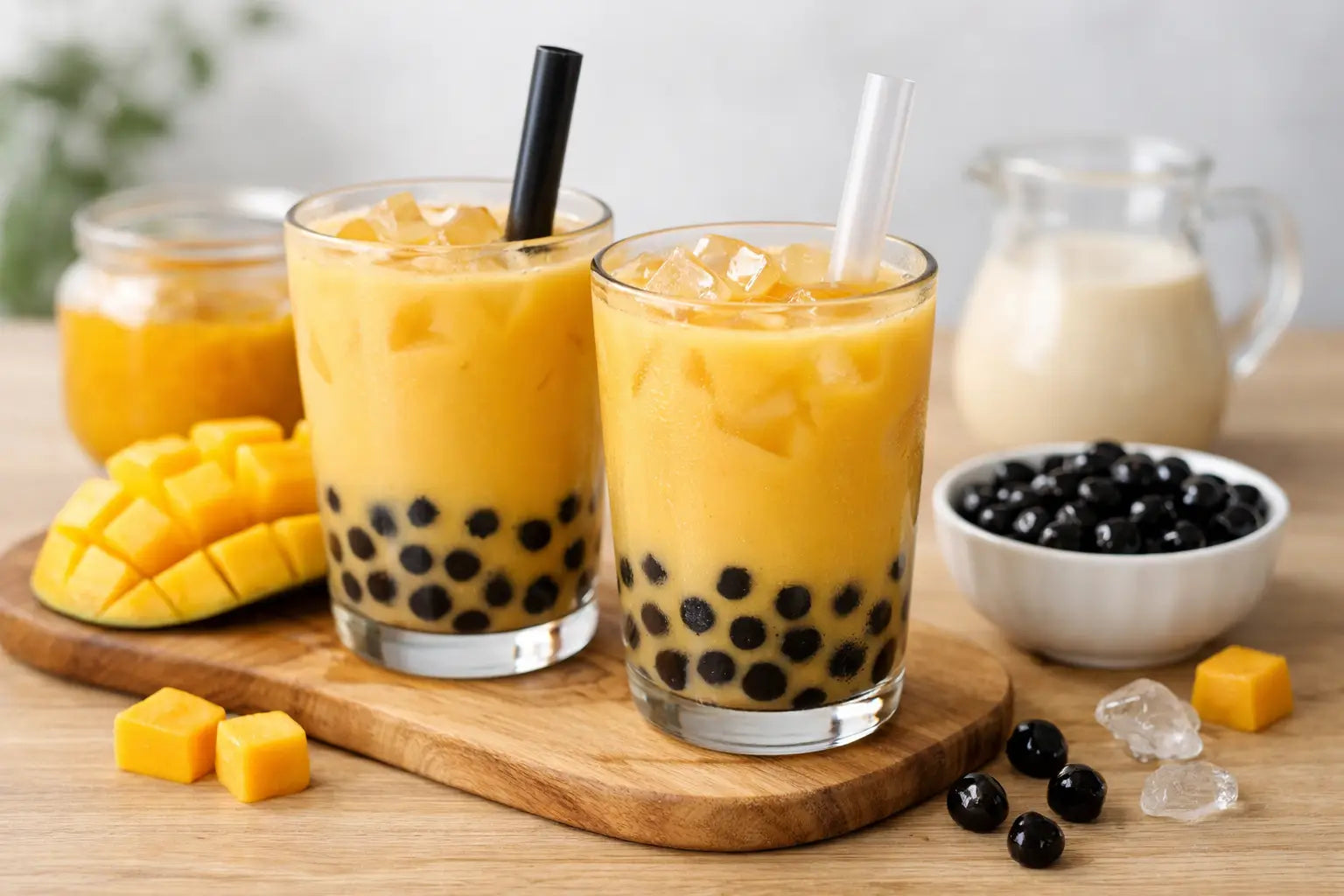
There is a point every bubble tea fan reaches when the craving hits, the queue feels too long, and the obvious answer is to make mango bubble tea at home instead. Good news - it is much easier than it looks, and when you get it right, it tastes bright, creamy, fruity, and properly refreshing.
Mango is one of those flavours that does a lot of work with very little fuss. It is naturally sweet, bold enough to shine through milk or tea, and friendly with almost every topping in the boba world. If you want a drink that feels a bit cheerful, a bit summery, and very easy to customise, mango bubble tea is a brilliant place to start.
What you need to make mango bubble tea at home
You do not need a full café set-up on your kitchen counter. For a classic mango bubble tea, you only need a tea base, something mango-flavoured, milk if you want a creamy version, ice, and your topping of choice.
A black tea base is the usual go-to because it gives the drink body and keeps the mango flavour from tasting too flat. Green tea works too if you want something lighter and fresher. For the mango element, you can use mango syrup, mango purée, or mango powder, depending on the style you like. Syrup is the quickest option, purée gives a fuller fruit flavour, and powder can be handy if you want a sweeter, creamier finish.
Then there is the fun bit - the bubbles. Tapioca pearls give you the classic chewy texture, but mango also works beautifully with popping boba, coconut jelly, or fruit jelly if you want something a little lighter. If you are making drinks for kids or first-time boba fans, popping boba is often the instant crowd-pleaser.
The easiest method for mango bubble tea
If your goal is a café-style drink without turning the kitchen upside down, keep the method simple. Brew your tea first and let it cool slightly. Hot tea is great for flavour, but if you pour it straight over ice with milk and syrup, it can water everything down too quickly.
For one serving, start with around 150ml of brewed tea. Add 2 to 3 tablespoons of mango syrup or purée, depending on how strong and sweet you want it. If you are making a milk tea version, add 80 to 100ml of milk. Dairy milk makes it richer, while oat milk gives a lovely smooth texture that works especially well with mango.
Shake or stir the drink with ice until it is chilled. Add your cooked tapioca pearls or fruit topping to the bottom of a glass, pour the mango tea over, and serve with a wide straw. That is the basic formula, and once you know it, you can tweak almost everything.
A quick ratio that usually works
A dependable starting point is tea, mango, milk, then ice in a 3:2:2 balance by feel rather than strict maths. If you prefer a stronger tea flavour, add more brewed tea. If you want it closer to a mango milkshake with boba, increase the mango and milk slightly and go easy on the tea.
That balance matters because mango can tip too sugary quite quickly. If your first attempt tastes more like dessert than bubble tea, do not worry - just pull back the syrup next time and let the tea do a bit more of the lifting.
Choosing the best mango flavour base
This is where the drink can go from nice to genuinely excellent. Mango syrup is convenient and consistent, which makes it ideal for beginners. You get the flavour fast, it blends easily, and it gives the drink that glossy café-style finish.
Purée is better if you want something that tastes more obviously fruity and less confectionery. The trade-off is texture. Some purées are thick, so your drink may be less smooth unless you shake it well. You may also need to strain it if you want a cleaner finish.
Fresh mango can work, especially if it is ripe and sweet, but it is not always the easiest choice for bubble tea. It can be fibrous, and if the fruit is under-ripe, the flavour can fall flat. If you want a fresh-fruit version, blending mango into a purée first usually gives the best result.
How to cook tapioca pearls properly
If you are using tapioca pearls, this is the one step worth paying attention to. Undercooked pearls are hard in the middle, overcooked ones can turn mushy, and neither is especially charming.
Boil them according to the pack instructions, then let them sit for the recommended time so the centres soften properly. After that, rinse lightly if needed and coat them in a little sugar syrup or honey to stop them sticking together. They are best used fresh, ideally within a few hours.
If that sounds like more effort than you fancy on a random Tuesday, fruit toppings are a great shortcut. Popping boba and jellies give you the bubble tea experience with almost no prep, which is one reason home kits are so popular with beginners.
How to make mango bubble tea at home your way
The best thing about learning how to make mango bubble tea at home is that there is no single correct version. You can keep it creamy, make it lighter, turn it into a frozen drink, or lean all the way into fruit.
For a classic mango milk tea, use black tea, mango syrup, milk, and tapioca pearls. For something fresher, swap the milk for extra tea and use popping mango boba or lychee jelly. If you want a treat that feels almost like a pudding in a cup, blend mango with ice and milk for a thicker, slush-style drink.
This is also a very good flavour for gatherings because it suits different ages and tastes. One person can go full chewy tapioca, another can choose popping boba, and someone else can skip the tea altogether for a fruitier cooler. That flexibility is part of the appeal.
Milk options that work well
Whole milk gives the richest result, but semi-skimmed is absolutely fine if that is what you keep in the fridge. Oat milk is one of the best non-dairy options because it stays smooth and creamy without overpowering the mango. Coconut milk can be lovely too, though it gives the drink a more tropical character, so it depends whether you want the mango to be the star or part of a bigger flavour mix.
Common mistakes and how to avoid them
The most common mistake is adding too much sweetness too early. Mango flavourings vary a lot, so start small and taste before adding more. It is much easier to build sweetness than rescue a drink that tastes like liquid sweets.
Another issue is weak tea. If the tea is too light, the drink can taste watery once the milk and ice go in. Brew it a little stronger than you would for an ordinary mug.
Texture can be another stumbling block. If your pearls are tough, they likely needed longer to cook or rest. If your drink tastes split or uneven, it probably needed a better shake. A cocktail shaker is handy, but a jar with a lid works perfectly well at home.
When a kit makes more sense
You can absolutely make bubble tea from scratch, but there are days when convenience wins. If you want reliable flavour, easy prep, and less hunting around for ingredients, a ready-to-use bubble tea kit takes a lot of the guesswork out. That is especially useful if you are making drinks for a birthday, a family film night, or a few friends who all want different toppings.
Bubble Panda-style kits are popular for exactly that reason. You get the fun, the customisation, and the café-style feel without needing to source five separate components from five different places. For beginners, that can mean the difference between trying bubble tea at home once and actually making it part of the weekend rotation.
A simple recipe to start with
Brew 150ml of black tea and leave it to cool for a few minutes. Prepare 50g of tapioca pearls or your chosen topping. In a shaker or lidded jar, combine the tea with 2 to 3 tablespoons of mango syrup and 100ml of milk, then add a generous handful of ice. Shake until chilled, add your topping to a tall glass, and pour the drink over. Taste, adjust if needed, and enjoy immediately.
Once you have made it once, the second round is where the fun starts. Add more mango for a bolder fruit hit, switch the topping, try green tea instead of black, or blend it with ice for a frozen version. Bubble tea at home should feel easy, not fussy.
If your first glass is not perfect, that is not failure - that is just recipe testing with a very drinkable reward at the end.
