
Tapioca Pearls vs Jelly for Your Bubble Tea
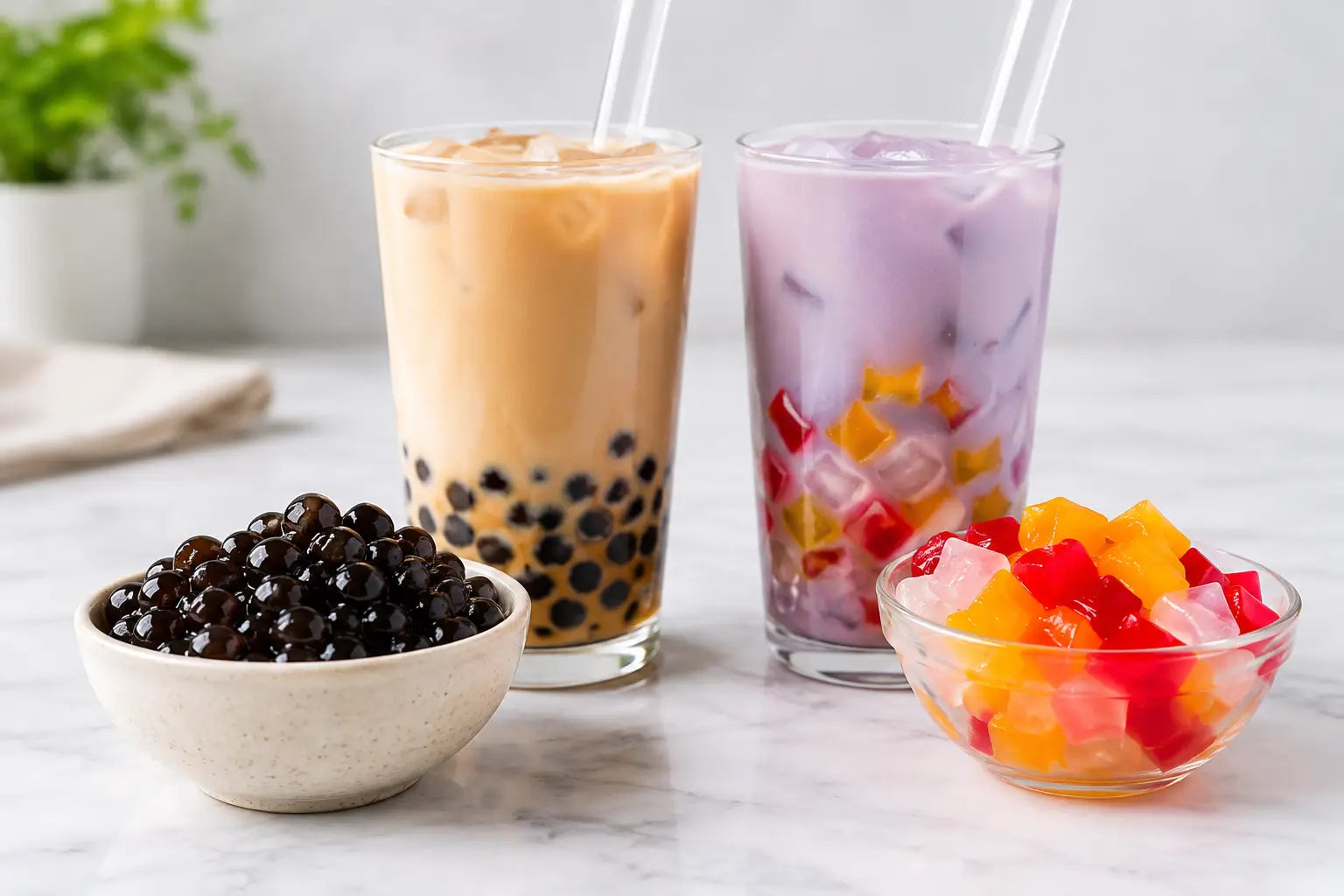
That first sip of homemade bubble tea is only half the fun. The real question arrives when your straw reaches the bottom: are you hoping for a satisfyingly chewy pearl, or a cool, fruity cube? In the great tapioca pearls vs jelly debate, there is no wrong choice - but each topping creates a very different drink.
Tapioca pearls bring the classic boba-shop experience: soft, springy and caramel-like. Jelly is lighter, brighter and often easier for first-time makers. Whether you are planning a movie-night treat, setting up a birthday bubble tea bar or simply mixing up your usual order at home, knowing the difference makes it much easier to build a drink everyone will love.
Tapioca Pearls vs Jelly: The Big Difference
Tapioca pearls, often called boba, are round balls made mainly from tapioca starch, which comes from cassava root. Once cooked, good pearls should be glossy, tender and bouncy, with a gentle chew at the centre. They are usually served in brown sugar syrup, giving them a warm, toasted sweetness that works beautifully with creamy milk teas.
Jelly toppings are cut into cubes or strips and have a soft, wobbly bite. They may be made with coconut jelly, konjac or other jelly bases, and they are commonly flavoured with fruit. Think lychee, mango, strawberry, green apple or rainbow jelly. Rather than adding a deep brown-sugar note, jelly brings colour and a fresh pop of flavour.
The simplest way to think about it is this: tapioca pearls are chewy and cosy; jelly is juicy-feeling and playful. One makes a drink feel rich and classic, while the other can make it feel lighter and more colourful.
Choose Tapioca Pearls for That Classic Chewy Bite
If your ideal bubble tea is a creamy brown sugar milk tea with proper café-style chew, tapioca pearls are the topping to reach for. Their neutral base lets the tea and syrup lead, while their texture turns every sip into a little snack.
They are especially good with black tea, chai-style blends, taro, chocolate and caramel flavours. The mellow sweetness of the pearls balances stronger tea and richer milk powders without fighting for attention. A brown sugar milk tea with tapioca pearls is popular for a reason: every element is warm, rounded and wonderfully comforting.
There is a small trade-off. Tapioca pearls need cooking, and they are at their best when served fresh. Leave them too long after cooking and they can become firmer than you would like. That does not make them difficult - it simply means they suit the moment when you want to make your drink, gather everyone round and enjoy it straight away.
For a bubble tea night at home, this can be part of the fun. Put the pearls on to cook while you shake the tea, choose a syrup and fill the cups with ice. It feels like making a treat rather than opening a packet, and the reward is that unmistakable boba-shop texture.
Best drinks for tapioca pearls
Tapioca pearls shine in creamy, dessert-inspired drinks. Try them with classic milk tea, brown sugar milk tea, taro, chocolate or a gingerbread-inspired blend for a cosy twist. They also work in fruit tea if you love contrast, but the chew is usually the star rather than the fruit flavour.
Use a wider bubble tea straw so the pearls can travel up easily. A narrow straw is a quick route to frustration, especially when excited little hands are waiting for their first sip.
Choose Jelly for Fruity Colour and Easy Variety
Jelly is brilliant when you want your bubble tea to feel bright, refreshing and a little bit different every time. It needs no cooking, so it is a particularly friendly choice for beginners, quick after-school treats and party drinks with plenty of toppings to choose from.
Its softer texture can also appeal to people who are not sure about the chewiness of tapioca. Some bubble tea fans adore a pearl’s bounce; others find jelly more immediately enjoyable because it is tender and light. If you are serving a mixed group, jelly is a very safe crowd-pleaser.
Fruit flavours are where jelly really gets to show off. Mango jelly in peach iced tea, lychee jelly with jasmine tea, or strawberry jelly in a milky strawberry drink can make a simple recipe feel extra special. The cubes look fantastic through a clear cup too, which matters when you are making drinks for a birthday table, sleepover or a photo-worthy afternoon at home.
Jelly can also make it easier to create more than one flavour from the same kit. Keep the tea base similar, then let everyone choose their own jelly, syrup and ice level. Suddenly, one kitchen becomes a tiny bubble tea bar.
Best drinks for jelly
Pair jelly with fruit teas, lemonade-style drinks, floral flavours and lighter milk teas. Lychee, mango and coconut jelly are lovely with green tea or jasmine tea, while strawberry and rainbow jelly bring plenty of fun to berry drinks. For a British-inspired treat, a bright rhubarb and elderflower-style drink with a fruity jelly topping feels celebratory without being too heavy.
Texture Matters More Than You Might Expect
Flavour gets most of the attention, but texture is often what decides a favourite topping. Tapioca pearls have resistance. You bite them, they bounce back, and the experience is slow and satisfying. They make a drink feel more filling, which is ideal when bubble tea is standing in for a sweet snack.
Jelly has a gentler bite. It slips through the straw easily, breaks softly and adds variety without making the drink feel heavy. It is often the better match for a hot day or a drink you want to sip alongside a meal.
This is also why combining toppings can be such a good idea. A scoop of tapioca pearls plus a little fruit jelly gives you both classic chew and a burst of flavour. Just avoid overloading the cup. Too many toppings can crowd out the tea, make the drink difficult to sip and hide the flavours you took time to choose.
Preparation, Storage and Serving at Home
Tapioca pearls need the most attention. Follow the packet instructions closely, stir during cooking so they do not stick together, then coat them in syrup after draining. Make only what you expect to use that day for the best texture. If you are making drinks for several people, prepare the pearls first, then assemble the teas while they are still lovely and soft.
Jelly is the low-fuss option. Once opened, it is ready to spoon into a cup, making it wonderfully convenient for spontaneous bubble tea cravings. Store it as directed on the pack and use clean utensils each time so your toppings stay fresh and tasty.
For either topping, build the drink in layers: topping first, then syrup if using, ice, tea and milk or fruit base. Give it a gentle stir before serving. This helps spread the flavour without turning your carefully layered creation into a cloudy muddle.
Which Topping Should You Buy?
Choose tapioca pearls if you want the traditional bubble tea experience, a chewy texture and a topping that pairs perfectly with creamy, indulgent drinks. Choose jelly if you want quick preparation, fruity flavour and colourful drinks that are easy to customise.
If you are buying for a gift or a family activity, a mix is even better. It gives everyone a chance to experiment, and it avoids the awkward moment when one person discovers they are not a fan of chewy boba. Bubble Panda kits make that sort of at-home taste test feel less like a complicated recipe and more like a proper occasion.
The best place to start is with the drink you are craving. Make brown sugar milk tea when you want pearls, shake up a fruity iced tea when you want jelly, and keep both on hand for the days when choosing just one feels far too serious for bubble tea.
