
12 Food Activities for Children to Make at Home
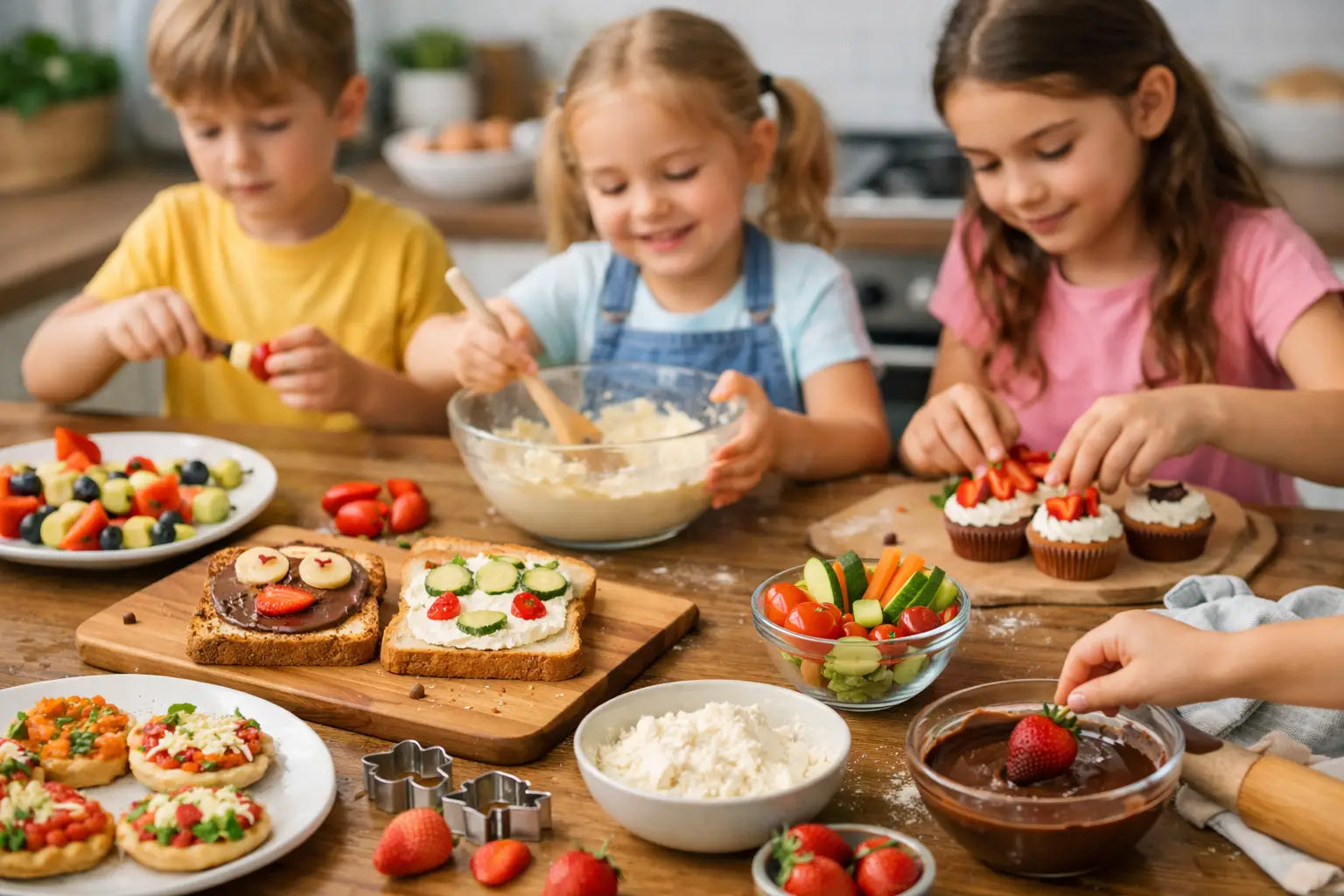
A bowl of strawberries, a stack of cups and a handful of bright toppings can turn an ordinary afternoon into the best bit of the day. The best food activities for children are not about producing picture-perfect treats. They are about stirring, sprinkling, tasting and proudly saying, “I made that!”
Cooking together also gives children a small, satisfying job to own. Younger children can pour, scoop and decorate, while older children can follow a recipe, practise measuring and invent flavour combinations. Pick an idea that suits the time you have, put down a wipe-clean tablecloth, and let a little mess be part of the fun.
Easy food activities for children with big results
1. Build a rainbow snack board
Lay out fruit and vegetables in as many colours as possible: raspberries, satsuma segments, pineapple, cucumber, sweetcorn and purple grapes all work brilliantly. Add crackers, cheese cubes, yoghurt dip or hummus, then ask children to arrange the food into colour bands, a rainbow or a silly face.
This is a helpful option for fussy eaters because there is no pressure to finish anything. The goal is simply to explore, choose and try. Keep portions small and refill the favourites rather than piling plates high.
2. Make-your-own mini pizzas
Use pitta breads, wraps or English muffins as quick pizza bases. Put out passata, grated cheese and a few toppings in little bowls, then let each child create their own design before an adult cooks them.
Try a smiley face with pepper eyes and a sweetcorn smile, or make a garden pizza with broccoli “trees”. Children enjoy being in charge, but too many toppings can make a pizza soggy, so encourage a light hand. It is a simple lunch activity that feels far more exciting than sandwiches.
3. Create a yoghurt parfait station
Clear glasses or small bowls make this activity feel café-worthy without much preparation. Offer yoghurt, sliced banana, berries, granola, crushed biscuits and a little honey or fruit sauce for older children. They can layer each ingredient, choosing whether they want neat stripes or a cheerful muddle.
For a party, put name labels beside the bowls and let everyone design a signature parfait. If allergies are a concern, keep each topping in its own spooned bowl and make sure everyone knows which ingredients are suitable for them.
4. Decorate biscuit creatures
A packet of plain biscuits, icing and a few decorations can keep little hands busy for ages. Turn digestives into owls, ginger nuts into lions or round biscuits into funny monster faces. Raisins, sprinkles, chocolate buttons and pretzel pieces are all useful building materials.
Set a simple rule before you start: decorations go on the biscuit first, then any extras can be tasted. That helps the ingredients last longer and avoids the great sprinkle shortage five minutes in.
5. Mix colourful fruit skewers
Fruit skewers are quick, bright and easy to adapt for different ages. Older children can carefully thread soft fruit such as strawberries, melon, banana and grapes onto child-safe skewers or paper straws. For younger children, use short, blunt cocktail sticks only with close adult supervision, or let them arrange fruit on a plate instead.
A yoghurt-and-honey dip makes the finished skewers feel like a treat. Cut grapes and other round foods lengthways for young children, and avoid serving foods that could be a choking risk without appropriate preparation.
6. Shake homemade butter
This one has a bit of food science built in. Pour double cream into a clean, tightly sealed jar, leaving space at the top. Children can take turns shaking it until the cream thickens, then separates into butter and buttermilk. An adult can drain the liquid and help press the butter together.
Spread the result on warm toast or crackers with a tiny pinch of salt. The shaking takes patience, which is part of the appeal: everyone gets a turn, and the transformation is genuinely surprising.
Food projects that work beautifully for parties
7. Hold a bubble tea making session
A DIY drinks station is ideal for birthdays, sleepovers and rainy-day treats. Prepare the tea base and any hot water elements yourself, then let children choose from chilled tea, milk, fruit syrups, popping boba and jelly toppings. Clear cups make every colourful layer part of the show.
For younger children, skip chewy tapioca pearls if they are not ready to manage them safely, and choose age-appropriate toppings with adult supervision. A Bubble Panda kit can make the set-up especially easy because the flavours, toppings and instructions are already gathered in one place. Give each drink a silly menu name, such as Berry Blast or Mango Moon, before the first sip.
8. Make edible jewellery
Liquorice laces and cereal with holes are perfect for edible necklaces and bracelets. Children can thread the pieces in patterns, making their initials, favourite colours or alternating designs. It is part craft activity, part snack, and it works well when you need something that does not involve an oven.
Choose larger cereal pieces for younger children and supervise throughout. If sweets are not right for the occasion, use dried pasta shapes for the threading activity and save the eating for a separate fruit snack.
9. Host a cupcake decorating challenge
Bake cupcakes ahead of time, or use shop-bought plain ones when time is short. Put out buttercream, coloured icing, fruit, sprinkles and a few toppings, then set a light-hearted challenge: create an animal, a beach scene, a space cake or a cupcake inspired by your favourite film.
There is no need to judge a winner unless the children love a bit of friendly competition. More often, the joy comes from presenting the finished cakes on a tray and seeing how wildly different they look. Keep a few plain cupcakes aside for anyone who prefers less icing.
10. Invent a mocktail menu
Children love the ceremony of a special drink. Set out sparkling water, diluted fruit juice, mint leaves, lemon slices, berries and ice. They can muddle soft fruit with the back of a spoon, choose a garnish and give their drink a name.
Avoid making drinks overly sweet by using juice as one element rather than the whole glass. A paper straw, a slice of fruit on the rim and a handwritten menu are often all it takes to make the activity feel properly special.
Food activities that sneak in useful skills
11. Run a no-bake energy bite workshop
Mix oats, sunflower seed butter or another suitable spread, desiccated coconut and a little honey or maple syrup. Children can roll the mixture into small balls, then coat them in cocoa powder, crushed cereal or coconut. Chill before eating so they firm up.
This activity is brilliant for practising measuring and talking about texture. The mixture should be sticky enough to roll but not so wet that it coats every hand in the kitchen. If it is too soft, add a few more oats; if it crumbles, add a little more spread.
12. Plan a teddy bears’ picnic
Ask children to help make a snack spread for their favourite soft toys. They could cut sandwiches into shapes with an adult nearby, fill small pots with berries, make cheese-and-cracker stacks and pour drinks into tiny cups. A blanket on the living-room floor is enough to set the scene when the weather is not picnic-friendly.
The gentle role-play often encourages children to try foods they might otherwise reject. It is easier to offer a cucumber sandwich to a teddy first, after all. Let the children serve the toys, then enjoy their own miniature feast.
Keep the fun bigger than the mess
The most successful kitchen activity is usually the one with a clear beginning, a few choices and a tasty finish. Prepare ingredients before inviting children in, keep hot appliances and sharp tools for adults, and accept that a little flour on the floor is evidence of a good afternoon. Whether you are making snack boards for Tuesday tea or colourful drinks for a birthday, give children room to experiment. The proud grin at the end is always worth the washing up.
