
Why Are Boba Pearls Hard? Easy Fixes at Home
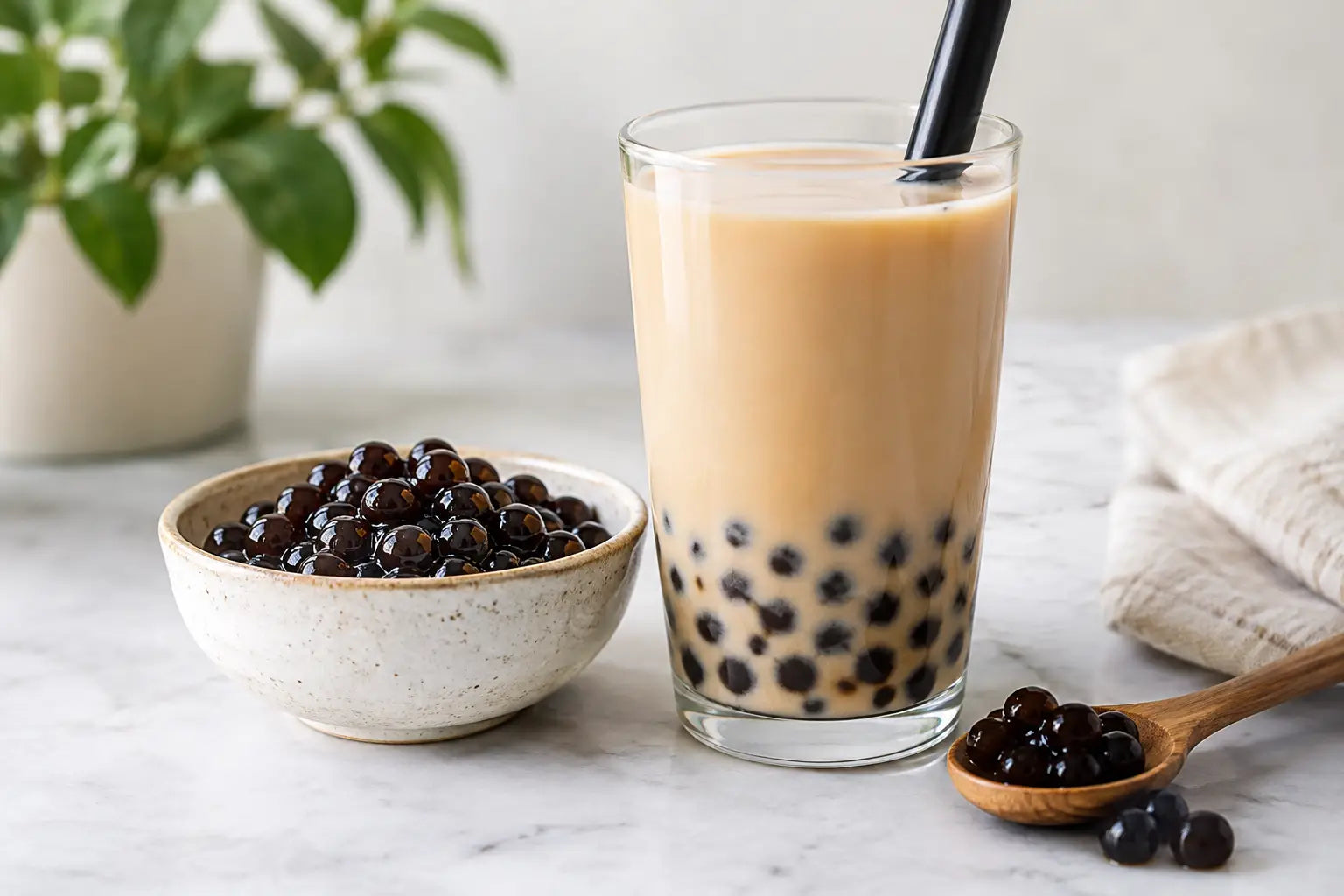
A boba pearl should have that lovely, springy chew - soft through the middle, pleasantly bouncy on the outside, and never something you have to wrestle through with an extra-wide straw. So, why are boba pearls hard when you make bubble tea at home? Usually, it comes down to timing, temperature or what happens after cooking.
The good news: tough tapioca is rarely a mystery ingredient problem. A few small changes can turn your next batch from stubborn little pebbles into café-style chewy boba. Put the kettle on - we are sorting it.
Why are boba pearls hard in the first place?
Tapioca pearls are made mainly from cassava starch. They need plenty of heat and water to hydrate properly. As they cook, the outside softens first, while the centre takes longer to become translucent and chewy. If that process is interrupted, the pearl can stay hard in the middle, turn firm all over, or become tough after it has cooled.
The most common issue is undercooking. Pearls may look dark and glossy on the outside but still have an opaque, chalky core. They need a proper rolling boil, not a few lazy bubbles around the edge of the pan. Starting them in water that is not hot enough can also make them cook unevenly.
Overcooking can cause trouble too. Leave boba boiling for too long and the outside may become overly soft, split or turn sticky, while the texture later firms up as it cools. The sweet spot depends on the size and type of pearl, so the instructions on the packet should always lead the way.
The five usual causes of tough tapioca
If your pearls are hard, one of these culprits is normally responsible:
- The water was not boiling hard enough. Tapioca needs active heat to cook through evenly.
- There was not enough water. Crowded pearls release starch and stick together, which stops even cooking.
- The cooking or resting time was too short. Many pearls finish cooking off the heat, with the lid on.
- They were rinsed or chilled too aggressively. A quick rinse can remove excess surface starch, but cold water can make some pearls firm up fast.
- They sat too long after cooking. Fresh tapioca boba is at its best soon after it is made and gradually becomes firmer as it stands.
How to cook boba pearls for the perfect chew
A reliable cooking method is less about fancy equipment and more about patience. Use a roomy saucepan, plenty of water and a timer. Do not be tempted to turn the heat down too soon just because the pearls look done.
Start with more water than you think you need
Bring a large pan of water to a rolling boil before adding the pearls. A useful rule is to use at least six to 10 parts water for every one part dried boba. This gives each pearl space to move, keeps the temperature from dropping too sharply and helps prevent a gluey clump at the bottom of the pan.
Add the pearls gradually, then stir straight away. Keep stirring gently for the first minute or two, especially if you are making a larger batch. Once they are floating and moving freely, follow your pack instructions for the boiling time.
Let the pearls rest under the lid
This is the step many first-time boba makers miss. After boiling, a lot of tapioca pearls need a covered rest in the hot water. The trapped heat gently cooks the centre without breaking down the outside.
If your boba is hard in the middle, it may not need more vigorous boiling. It may need that quiet resting time instead. Check one pearl after the suggested rest. It should look mostly translucent with no crunchy or powdery centre.
Sweeten after cooking
Drain the cooked pearls and transfer them into a little sugar syrup, brown sugar syrup or honey mixture while they are still warm. This adds flavour and helps keep the pearls moist and glossy. Plain cooked boba left dry in a bowl can firm up surprisingly quickly.
For a classic brown sugar finish, stir a spoonful of brown sugar with a splash of hot water until dissolved, then coat the warm pearls. You only need enough syrup to cover and protect them, not drown your drink before it reaches the glass.
Can you rescue hard boba pearls?
Sometimes, yes. If the pearls are only slightly firm and still warm, return them to simmering water for a few more minutes, then give them another covered rest. Test one before draining the whole batch. This works best when the centre is undercooked rather than completely dry or stale.
If they have already cooled and gone tough, a brief reheat in hot water may soften them a little, but it will not always restore that fresh, bouncy texture. Tapioca starch naturally firms as it cools, so reheated boba can be softer than before but not quite as lovely as a just-cooked batch.
Pearls that are hard, chalky and opaque after a full cook and rest are less likely to be saved. In that case, check the packet date, measure the water more generously next time and make sure the pan was at a real rolling boil before the pearls went in.
What not to do when your boba turns hard
Do not soak dried tapioca pearls before cooking unless the packet specifically tells you to. Unlike some dried beans or grains, most quick-cook boba is designed to go directly into boiling water. Soaking can make the exterior gummy while leaving the centre difficult to cook consistently.
Avoid storing cooked boba in the fridge. It sounds sensible, but cold temperatures speed up the firming process. Your pearls may survive, but that signature chew often will not. If you are preparing drinks for a party, cook the pearls close to serving time and hold them at room temperature in syrup for the shortest practical window.
Also, do not judge readiness by colour alone. Some pearls look nearly transparent before the middle is fully cooked, while others retain a little colour even when they are perfectly chewy. The best test is always the fun one: taste a pearl.
Timing matters more than batch size
Making bubble tea for one is fairly forgiving. Making enough for a birthday sleepover, family movie night or a full-on kitchen boba bar needs a little more care. A large batch can bring the water temperature down dramatically, which is why pearls sometimes turn out unevenly cooked.
For bigger batches, use a larger pan rather than trying to squeeze everything into a small one. Add the boba in stages if needed, keep the water actively boiling and stir at the beginning so no pearls settle and stick. It is a few extra seconds of attention for a much better first sip.
If you are serving several flavours, make the tapioca first and build the drinks afterwards. Tea, milk powders, syrups and ice are happy to wait a few minutes. Freshly cooked boba is the one guest that prefers not to be kept waiting.
Not all bubble tea toppings behave like tapioca
It is worth checking which topping you have before reaching for the saucepan. Tapioca boba pearls need cooking, but popping boba is ready to use and should not be boiled. Heat can make the delicate juice-filled spheres burst, leaving you with a very tasty but rather less poppy drink.
Jellies are usually ready to spoon into your cup too. That makes them brilliant for quick bubble tea moments, especially when you want to set out a colourful topping station without juggling pans. Save the cooking time for traditional tapioca pearls, where that warm, fresh chew is part of the magic.
A simple boba checklist for next time
Before you start, check that your pearls are in date and your pan is large enough. Cook in plenty of properly boiling water, stir early, follow the pack timing, and do not skip the covered resting stage if it is included. Then drain, sweeten and enjoy them while they are fresh.
Bubble tea is meant to feel like a treat, not a science exam. Once you have found the rhythm, making a perfectly chewy batch becomes one of those wonderfully satisfying kitchen wins - just add your favourite tea, a generous scoop of ice and the widest straw you can find.
