
Can You Freeze Tapioca Pearls? The Honest Answer
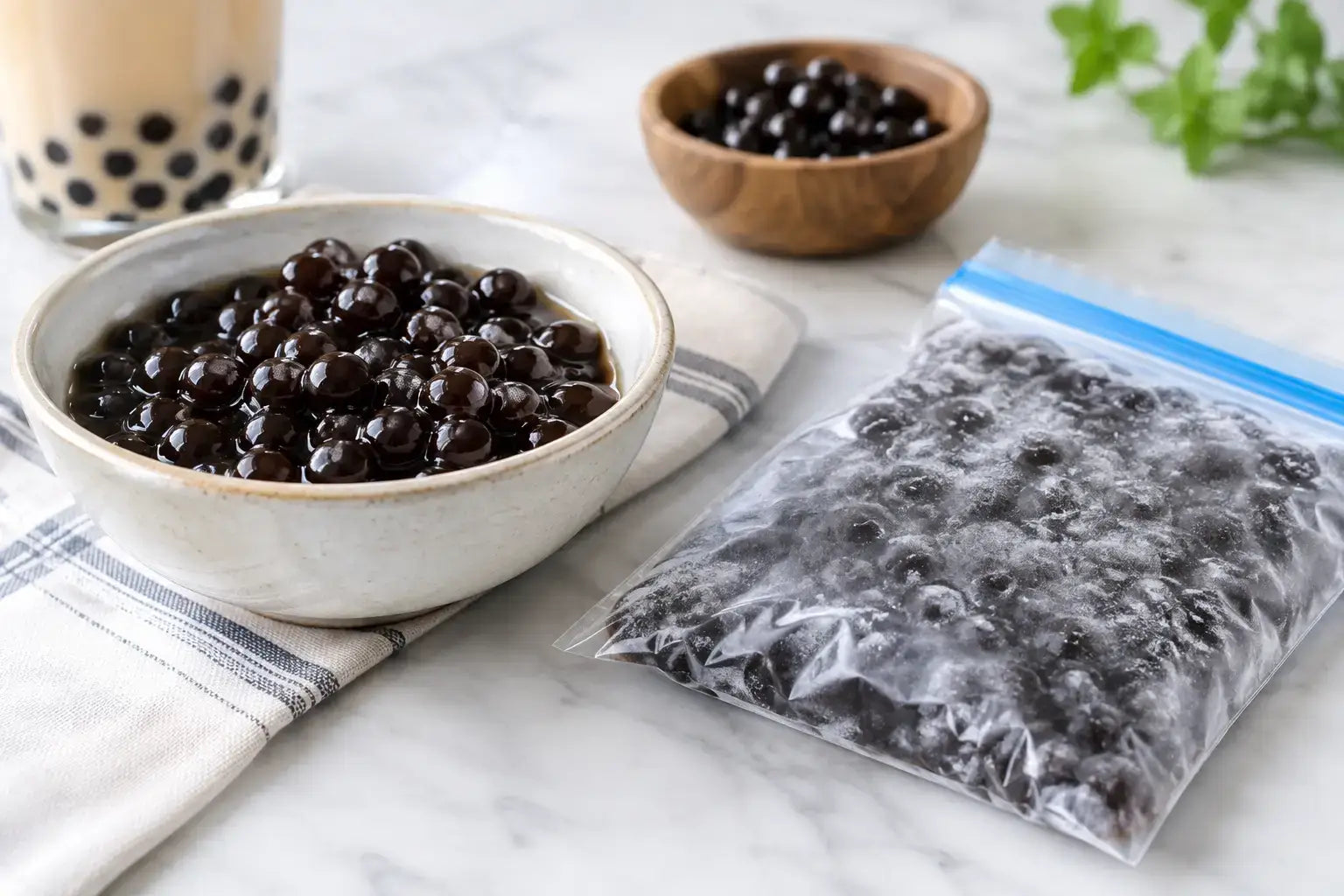
Freshly cooked boba has a very short window of perfection: glossy, springy, sweet and satisfyingly chewy. So, can you freeze tapioca pearls when you have made too many for one bubble tea round? You can, but whether you should depends entirely on the type of pearl and how much you care about that classic café-style chew.
For the best at-home bubble tea, cook only what you plan to use that day. Tapioca pearls are a little fussy, but that is also what makes a properly made brown sugar boba so good.
Can you freeze tapioca pearls after cooking?
Yes, cooked tapioca pearls can be frozen, but they will not return to their original texture perfectly. Freezing changes the water inside the cooked starch. Once thawed, pearls can turn firmer in the middle, slightly grainy, overly soft on the outside, or less bouncy than they were fresh.
That does not mean they are automatically destined for the bin. Frozen cooked boba can still work in a creamy milk tea, iced coffee or blended drink where the pearls are not the whole show. Just think of it as a practical save for leftovers, not a route to freshly cooked, shop-quality boba next week.
If texture is your top priority, enjoy cooked pearls within a few hours. Keep them in their syrup at room temperature while serving, rather than chilling them straight away. Refrigeration makes tapioca starch firm up quickly, and the fridge can be almost as tough on the chew as the freezer.
The best way to freeze cooked boba
If you need to save cooked tapioca pearls, freeze them in small portions. This makes it easier to defrost only enough for one or two drinks, rather than wrestling with one giant boba iceberg.
Let the pearls cool briefly in their sugar syrup first. They should no longer be steaming, but do not leave them sitting out for hours. Spoon the pearls and a little syrup into an airtight freezer-safe container or bag, leaving a small gap at the top for expansion. Label it with the date, then freeze it flat if using a bag.
Use frozen cooked boba within about one month for the best result. It will remain safe for longer if kept properly frozen, but the texture will continue to suffer over time. Bubble tea is meant to feel like a treat, not a science project you have been avoiding since February.
How to revive frozen cooked pearls
Do not thaw cooked pearls slowly on the kitchen counter. Instead, take out the portion you need and warm it gently in a small pan with a splash of water and brown sugar syrup. Stir often over a low heat until the pearls have separated and warmed through.
If they seem too firm, add a little more water and give them a few extra minutes. If they have become very soft, use them in a thicker drink such as a milkshake-style bubble tea, where that softer texture is less noticeable. Serve them straight away. Reheating may improve frozen boba, but letting it sit around again will not.
Can you freeze uncooked tapioca pearls?
The answer changes depending on what you have bought or made. Most shop-bought dry tapioca pearls do not need freezing at all. Keep the unopened packet in a cool, dry cupboard, away from moisture and direct sunlight. Once opened, transfer any leftovers to an airtight container. Freezing dry pearls can introduce condensation when they come back to room temperature, which may cause clumping or affect how they cook.
Fresh, homemade tapioca pearls are different. If you have rolled your own pearls from tapioca starch and are not ready to cook them, freezing is a smart option. Arrange them in a single layer on a lined tray until firm, then transfer them to an airtight bag or container. This stops them sticking together in one enthusiastic tapioca lump.
Cook frozen homemade pearls directly from frozen. There is no need to thaw them first, as thawing can make the outside sticky and misshapen. They may need a little longer in boiling water than freshly made pearls, so check for a chewy centre before serving.
What about instant boba and ready-to-cook packs?
Always follow the instructions on the packet first. Quick-cook and instant pearls have been processed differently from traditional dried boba, so storage advice can vary. In general, an unopened shelf-stable pack belongs in the cupboard, not the freezer.
Once cooked, the same rule applies: they are nicest on the day they are made. If you need to freeze leftovers, portion them with syrup and accept a small texture trade-off when reheating.
Never freeze popping boba
Popping boba is not the same as tapioca boba. Those colourful juice-filled spheres have a delicate outer membrane designed to burst when you bite them. Freezing can damage that membrane, leaving you with split bubbles, leaked juice and a less-than-magical drink.
Keep unopened popping boba according to its pack instructions, and refrigerate after opening if directed. For a party or family bubble tea bar, bring it out chilled just before serving. The little pop is worth protecting.
How to avoid leftover pearls in the first place
The easiest storage trick is simply cooking the right amount. For one generous drink, a small scoop of dry tapioca pearls is usually plenty, but check your recipe or pack guidance because pearl sizes vary. It is much easier to cook another batch than to rescue a freezer-softened one.
Plan your drinks around the pearls, too. Brew the tea, prepare your milk or syrup, and have cups and wide straws ready before the boba finishes cooking. Once the pearls are in syrup, they are ready for their starring role. This is especially helpful when making bubble tea with children, friends or guests - everybody gets the best texture at the same time.
If you are making several flavours, keep one bowl of warm syrupy pearls in the centre and let everyone build their own drink. A classic brown sugar milk tea suits them beautifully, but they are also brilliant with fruity teas, vanilla milk, caramel flavours and a pinch of cinnamon in a cosy seasonal drink.
A quick storage guide for every kind of boba
For dry, uncooked tapioca pearls, use an airtight container in a cool cupboard. For fresh homemade uncooked pearls, freeze them in a single layer first, then cook from frozen. For cooked tapioca pearls, serve on the day where possible; freeze only if you are happy with a softer, less chewy result after reheating. For popping boba, skip the freezer completely.
One final tip: if your saved pearls are hard, oddly crumbly, sour-smelling or have been stored outside safe temperatures for too long, do not try to rescue them with extra syrup. Start fresh. A new batch takes a little time, but that first proper slurp of tea, ice and perfectly chewy boba makes the effort feel like part of the fun.
