
How to Make Fruit Tea Concentrate at Home
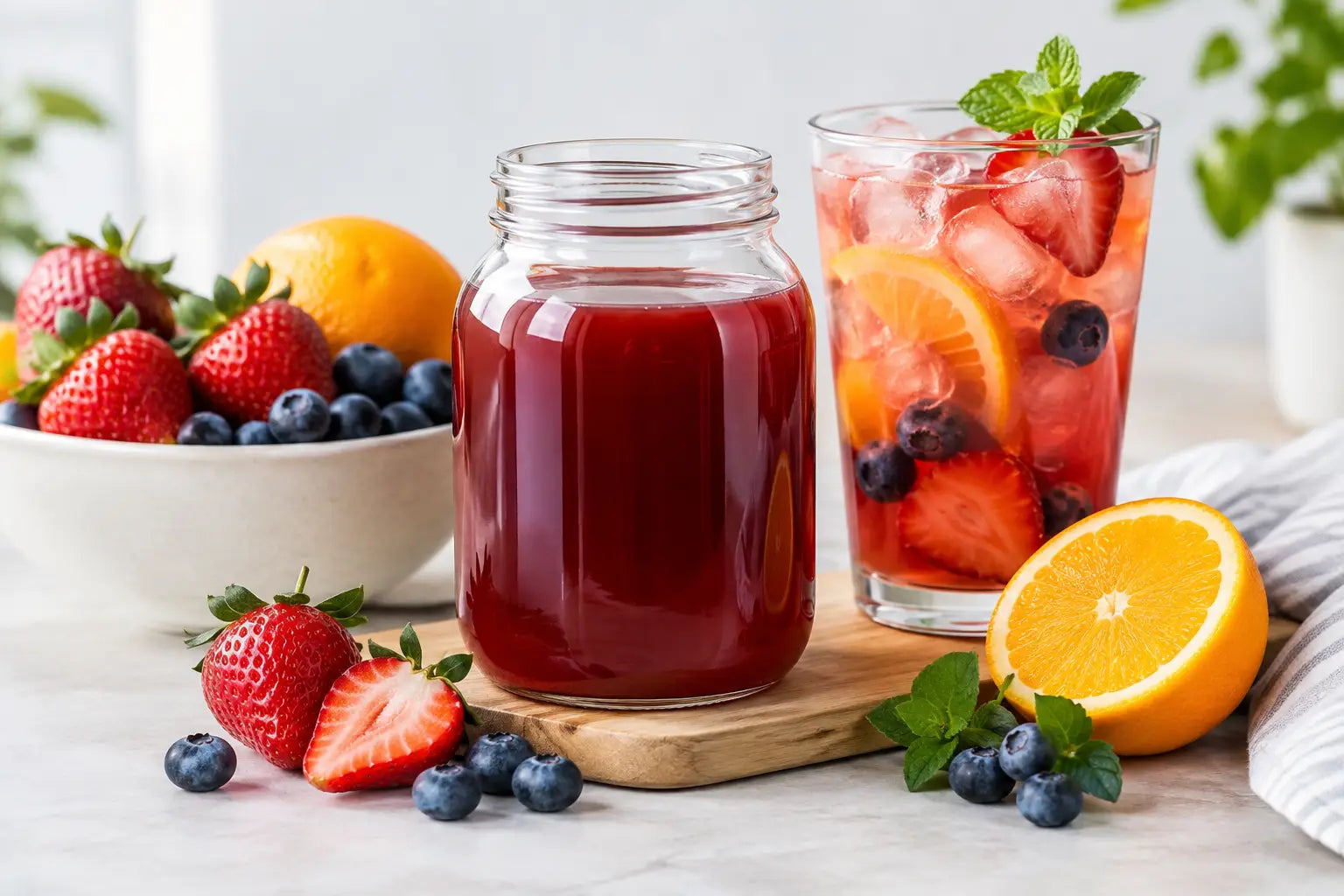
A brilliant fruit tea should taste like more than sweet water with a few lonely berries floating about. When you make fruit tea concentrate, you build a punchy base that stays bright after ice, sparkling water and juicy popping boba have joined the party. Keep a bottle in the fridge and café-style drinks are only a shake away.
What is fruit tea concentrate?
Fruit tea concentrate is a strongly flavoured blend of brewed tea, fruit and sugar. It is designed to be diluted before drinking, usually with cold water, soda water or extra ice. Think of it as the shortcut behind a colourful fruit tea that tastes consistent every time.
The tea provides gentle tannins and depth, while fruit brings aroma, colour and a fresh, tangy lift. Sugar is not only there for sweetness. It rounds off sharp citrus or berry flavours and helps the concentrate keep its character once diluted.
For a boba-shop feel, make the concentrate a little stronger than you think you need. Ice melts. Toppings carry their own juice. A concentrate that tastes perfect straight from the jug can taste a bit shy in the finished drink.
How to make fruit tea concentrate
This recipe makes around 700 ml of concentrate, enough for four to six generous iced fruit teas depending on how strong you pour it. It is beginner-friendly, flexible and ideal for a weekend treat, a birthday spread or a sunny afternoon in the garden.
Ingredients
You will need 500 ml freshly boiled water, four black tea bags or four teaspoons loose-leaf black tea, 250 g fruit, 100 to 150 g caster sugar, and one tablespoon lemon juice. Black tea gives the most classic fruit-tea flavour, but green tea works beautifully with peach, lychee, mango and citrus.
Choose ripe fruit that smells good before you start. Frozen berries are excellent here and often give a bolder colour than out-of-season fresh ones. Strawberries, raspberries, blueberries, peaches, mango, pineapple and oranges all work well. For a clean, bright finish, add lemon or lime. If you are using very sharp fruit such as raspberries or grapefruit, begin with the higher amount of sugar.
Brew the tea without bitterness
Place the tea bags in a heatproof jug or saucepan and pour over 500 ml of freshly boiled water. Steep black tea for three to four minutes, then remove the bags. Green tea needs cooler water and a shorter steep - use water that has stood for a few minutes and steep for two to three minutes.
Leaving tea in for too long is the quickest way to make a fruity drink taste dry and bitter. Fruit and sugar can soften bitterness, but they cannot fully hide it. A clean tea base gives you far more room to play with flavours.
Cook the fruit into the tea
Add your fruit and sugar to the warm brewed tea. If you are using large strawberries, peach slices or mango chunks, lightly crush them first with the back of a spoon. Bring the mixture to a gentle simmer for five to eight minutes, stirring until the sugar dissolves.
Do not boil it fiercely. Aggressive heat can dull fresh fruit flavours, especially berries and citrus. The aim is to draw out juice and fragrance, not make jam. Take the pan off the heat, stir in the lemon juice and leave everything to steep for 15 minutes.
Strain through a fine sieve into a clean bottle or jug. Press the fruit gently to release the juice, but do not force every last bit through. Over-pressing can push cloudy pulp and tiny seeds into the concentrate. That is harmless, but a smoother concentrate looks extra lovely in a clear glass.
Cool completely, cover and refrigerate. Your fruit tea concentrate is ready for its starring role.
The easy serving ratio
Start with one part concentrate to two parts cold water. For one drink, pour 80 to 100 ml concentrate over a glass packed with ice, then top with 160 to 200 ml water. Taste and adjust. Use less water for a stronger café-style drink, or add soda water when you want something lighter and fizzier.
This is where the fun starts. Add cooked tapioca pearls for a classic chewy finish, jelly for a fruity wobble, or popping boba for little bursts of flavour. If you are serving a few people, put out the concentrate, ice and toppings separately so everyone can build their own creation. It turns an ordinary drink break into a mini bubble tea bar.
Bubble Panda-style flavour play is very welcome here. Try strawberry and lemon with strawberry popping boba, peach and black tea with mango jelly, or raspberry with a splash of elderflower cordial for a British-inspired twist. Keep the elderflower subtle - it should lift the berries, not turn the drink into perfume.
Choose fruit and tea that work together
There is no single best combination, but some pairings are easier to balance than others. Black tea is fuller and malty, making it a great match for berry, peach, cherry and orange concentrates. Green tea has a softer, grassier flavour that suits mango, pineapple, lychee and lemon. Jasmine tea is gorgeous with peach or strawberry, though it can be overwhelmed by heavily spiced fruit mixes.
If you want a darker, jewel-toned drink, use blueberries, blackberries or mixed frozen berries. For a sunny orange-pink colour, choose peach, mango or pineapple with a little passion fruit. Citrus is best used as an accent rather than the entire fruit base, as too much pith can make the concentrate bitter.
A few flavour ideas worth keeping on repeat are:
- Strawberry, lemon and black tea for a classic pink fruit tea.
- Peach, jasmine tea and a touch of honey for a softer floral drink.
- Mango, lime and green tea for a tropical, zingy glass.
- Raspberry, orange and black tea for a bold party-friendly option.
Sweetness, texture and other useful tweaks
Taste the concentrate once it has cooled before deciding whether it needs more sugar. Warm mixtures taste less sweet than cold ones, so adjustments are more accurate after chilling. If it needs more sweetness, dissolve a little sugar in a splash of hot water first, then stir it in. Honey can be used, but its flavour is noticeable, so it suits peach, lemon and ginger better than delicate lychee or berry blends.
For a clearer drink, strain twice. For more body, leave a little soft fruit pulp in the mix. Neither option is wrong - it depends on whether you want a polished bubble-tea-shop look or a homemade, smoothie-like feel.
Want a less sweet concentrate? Use 75 g sugar, but plan to drink it within three days and expect a sharper result. Sugar helps preserve flavour, so reducing it is a trade-off rather than a free swap. Sugar-free syrups can work for serving individual glasses, but they are less reliable for storing a homemade fruit mixture.
How long does homemade concentrate last?
Store fruit tea concentrate in a thoroughly clean, sealed bottle in the fridge and use it within five days. Always pour it into a clean glass rather than drinking from the bottle, and keep it chilled between servings. If it smells fizzy, looks mouldy or has an odd fermented scent, bin it.
For longer storage, freeze it in ice cube trays. Pop a few cubes into a glass, add cold water as they melt and you have an instant fruit tea that will not get watered down. It is especially handy when you want one drink rather than a full jug.
Make your concentrate the day before a gathering, then prepare tapioca pearls close to serving time. Pearls are at their chewiest fresh, while the tea base actually benefits from a little fridge time. That small bit of planning means less kitchen faff and more time choosing your favourite toppings, clinking colourful glasses and enjoying the first sip.
